

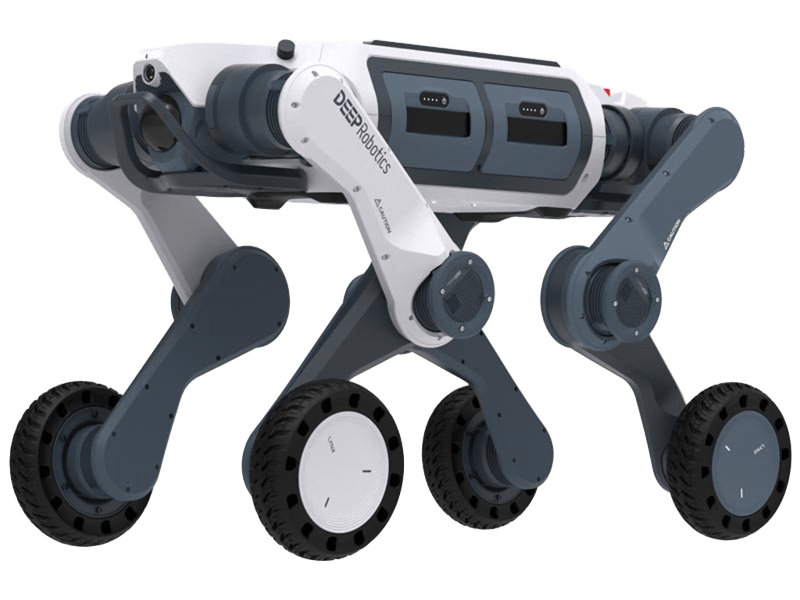
DEEP Robotics LYNX M20S
- Back payload
- 35 kg
- Unloaded runtime
- 3.5–5 h
- Operating speed
- 2 m/s

Price on request · Available to order
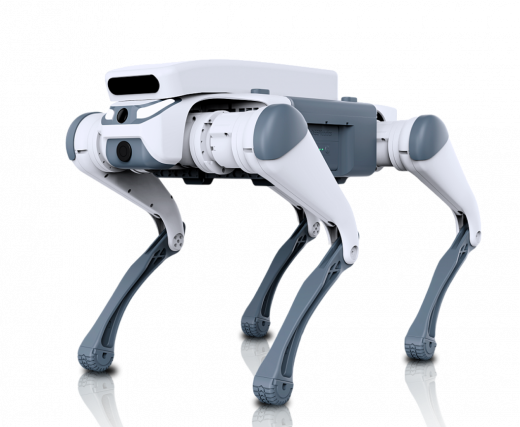
DEEP Robotics Lite3 Pro is a programmable quadruped platform for studying motion and the interaction between a mobile robot and its surroundings. The Lite3P version includes obstacle stopping, object following and obstacle avoidance. It suits teaching and research teams that want to connect their software with perception data and the behaviour of a physical legged mechanism.
A Lite3 Pro exercise can start with a simple situation: the robot receives a direction, encounters an object and changes behaviour according to the selected mode. Stopping, following and avoidance serve different goals. Comparing them helps explain how perception contributes to action selection and why the purpose of an application matters alongside the movement capabilities of its hardware.
The legged structure brings physical contact with the surface into that software problem. Support changes and body posture affect balance and the resulting path. Algorithm behaviour is therefore observed on the actual platform under defined conditions. Repeated trials help separate the effect of a software change from the effect of another surface or a different load arrangement.
The manufacturer provides a URDF model, SDK, APIs and perception interfaces. These support learning about the robot before moving into custom code. The model describes kinematics within a software environment, while the interfaces connect application logic with the physical system. The team can then compare a planned action sequence with the way it is executed by the mechanism.
An industrial IMU forms part of the motion-control architecture. Platform state and sensor information help interpret results: what the application requested, what movement occurred and how the body posture changed. This supports a research process in which each new version of a program is compared with a defined baseline experiment rather than judged only from an isolated demonstration.
USB-C, USB, HDMI and Ethernet provide equipment connections. Additional sensing and computing modules are selected according to the application. A data-processing study might, for example, use an onboard computer and a custom sensor. Their function and processing are project choices, with the modular architecture allowing them to become components of the wider system.
A mounted instrument adds the weight of its bracket and cables as well as its own mass. Position affects body balance, while the module's dimensions affect leg clearance and sensor visibility. Experiment duration also depends on equipment consumption and the movement being performed. Keeping the same hardware and load placement across sessions supports a more useful comparison of software behaviour.
Lite3P is a motion and perception development platform with its own function set. The family also contains a lidar version with a different navigation arrangement. Pro is relevant when a project uses its following and avoidance modes while the team develops the wider application logic. For a UAE robotics course or laboratory, it supports the complete experimental cycle: define an action, implement it in code and observe the result on a real robot.

Tell us about your task, site and robot. Leave your contact details so we can discuss the scope and next steps.