

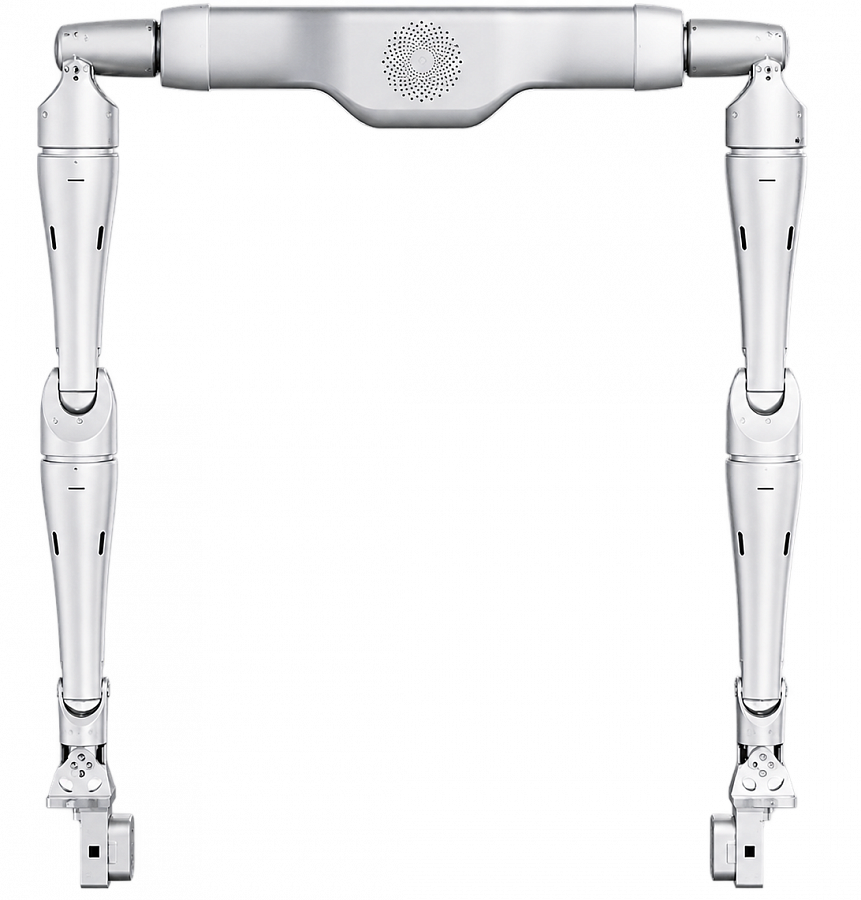
Linker Humanoid V2
- Arm payload
- 2 kg
- Arm axes
- 2×7
- Height
- ≈145–195 cm


Price on request · Available to order
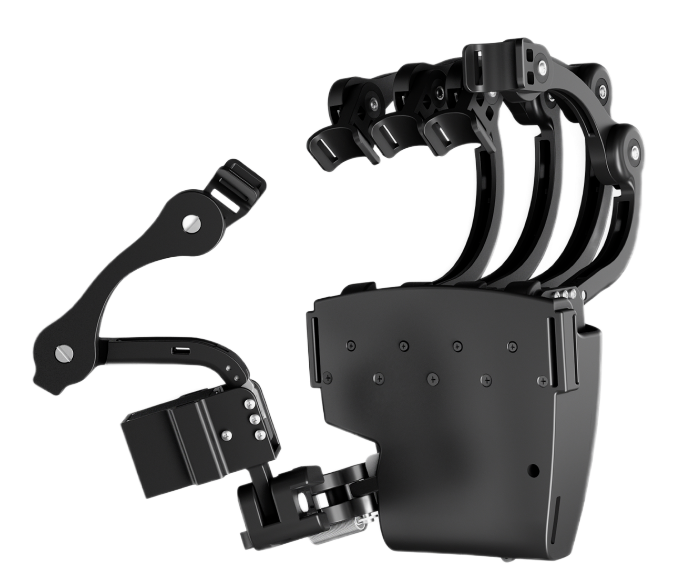
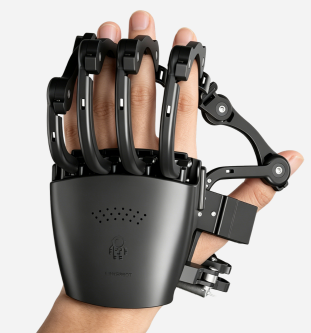
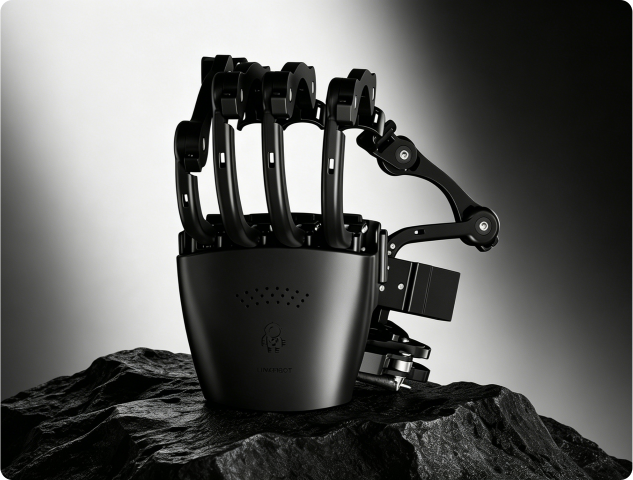
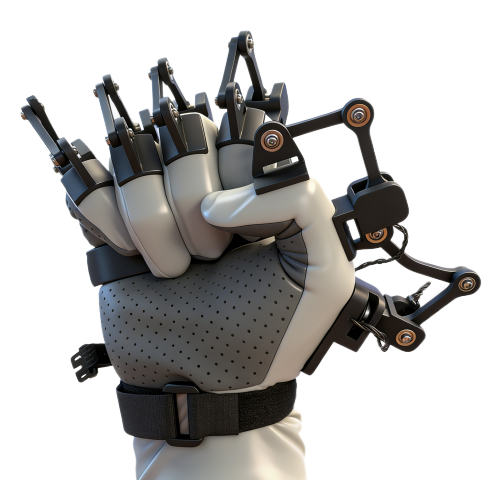
Linker FFG is Linkerbot's force-feedback glove for capturing hand motion and creating an interactive connection with a virtual environment or robotic hand. It combines measurement of the operator's finger movements with mechanical feedback during grasping. Its intended application areas include dexterous-hand teleoperation, virtual-reality interaction, professional simulation and research into human-machine control.
The glove tracks 21 degrees of freedom of hand movement. These are measured motion dimensions, rather than twenty-one powered feedback axes. The published hardware arrangement includes 16 potentiometers and five servo actuators, with sensing and mechanical feedback performing different roles in the system.
Linkerbot lists a motion-capture angular error of 0.08 degrees. That figure concerns the glove's measurement function and should not be interpreted as the accuracy of an entire remote robot. Reproducing an operator's movement also depends on calibration, the robot hand's geometry and the software mapping between the two mechanisms. A useful experiment distinguishes the quality of the recorded human motion from the quality of the robot's response.
Force feedback lets a developer create an interface in which the operator receives a physical response as well as sending finger positions. Maximum output torque is stated as 3.5 kgf·cm. This is a feedback-mechanism torque, not a payload rating for a remote robotic hand and not a measurement of how much an object weighs.
One possible research arrangement maps an operator's grasp to a robot and uses contact information to determine the glove's response. It requires compatible sensing, signal processing and control software around the glove. The FFG is a component of that arrangement; it does not independently provide object recognition or a complete ready-to-use telemanipulation application.
The specified output frequency is 100 Hz with a wired connection and 30 Hz wirelessly. The two modes have different update behaviour, which matters when designing an interactive control loop. A wired serial connection can suit a fixed laboratory station, while wireless operation reduces the physical constraint imposed by the data cable. The exact electrical standard of the serial connection should be checked for the selected hardware package.
The manufacturer's indoor wireless range is up to 5 metres. This describes a local connection within a working area, rather than an internet link to a distant robot. A project involving another room, building or site needs its own network design and an assessment of end-to-end delay, including how the system responds if communication is interrupted.
The glove weighs 390 g and uses a 5 V USB-C power connection. Cable routing, fit and calibration matter when collecting repeated demonstrations or working through a long sequence of movements. Establishing a consistent neutral pose makes it easier to compare recordings and avoid confusing differences in glove adjustment with differences in the task itself.
For UAE robotics teams, the FFG offers a way to investigate teleoperation, motion demonstration and feedback-driven interaction on a local research station. Virtual training is another possible use, including medical simulation environments, but that is distinct from a certified clinical or therapeutic function. Selection should focus on the movements to be captured, the intended feedback effect and the software needed to link the glove to the chosen simulator or robot.
Tell us about your task, site and robot. Leave your contact details so we can discuss the scope and next steps.