

Linker Humanoid V2
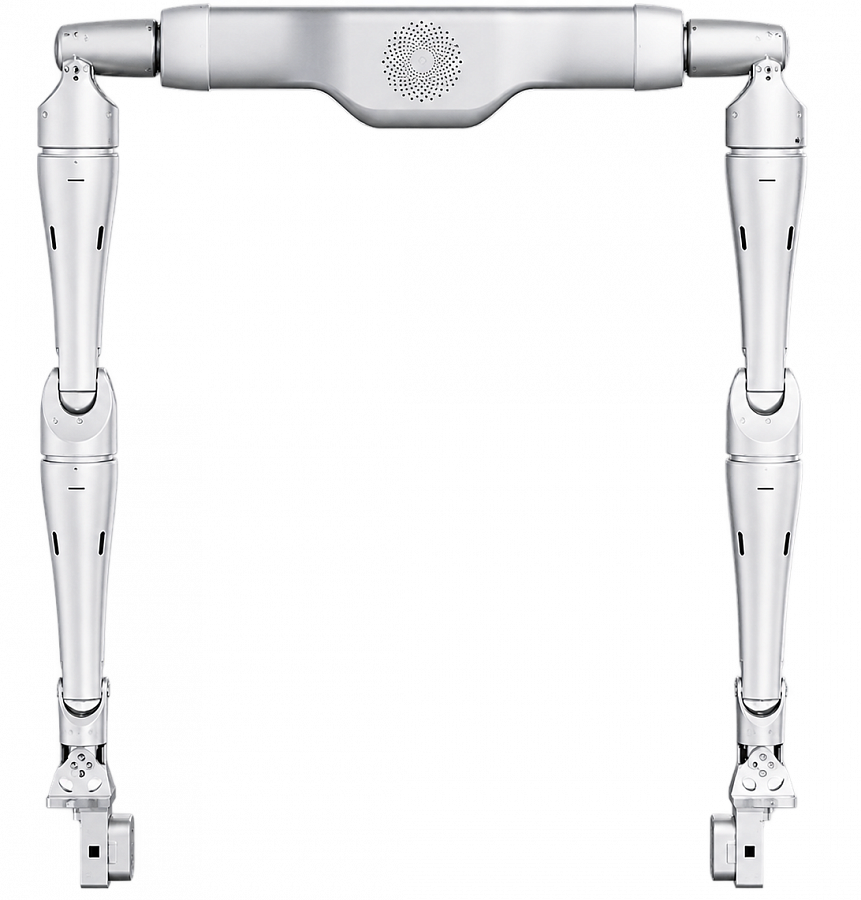
- Arm payload
- 2 kg
- Arm axes
- 2×7
- Height
- ≈145–195 cm

Price on request · Available to order
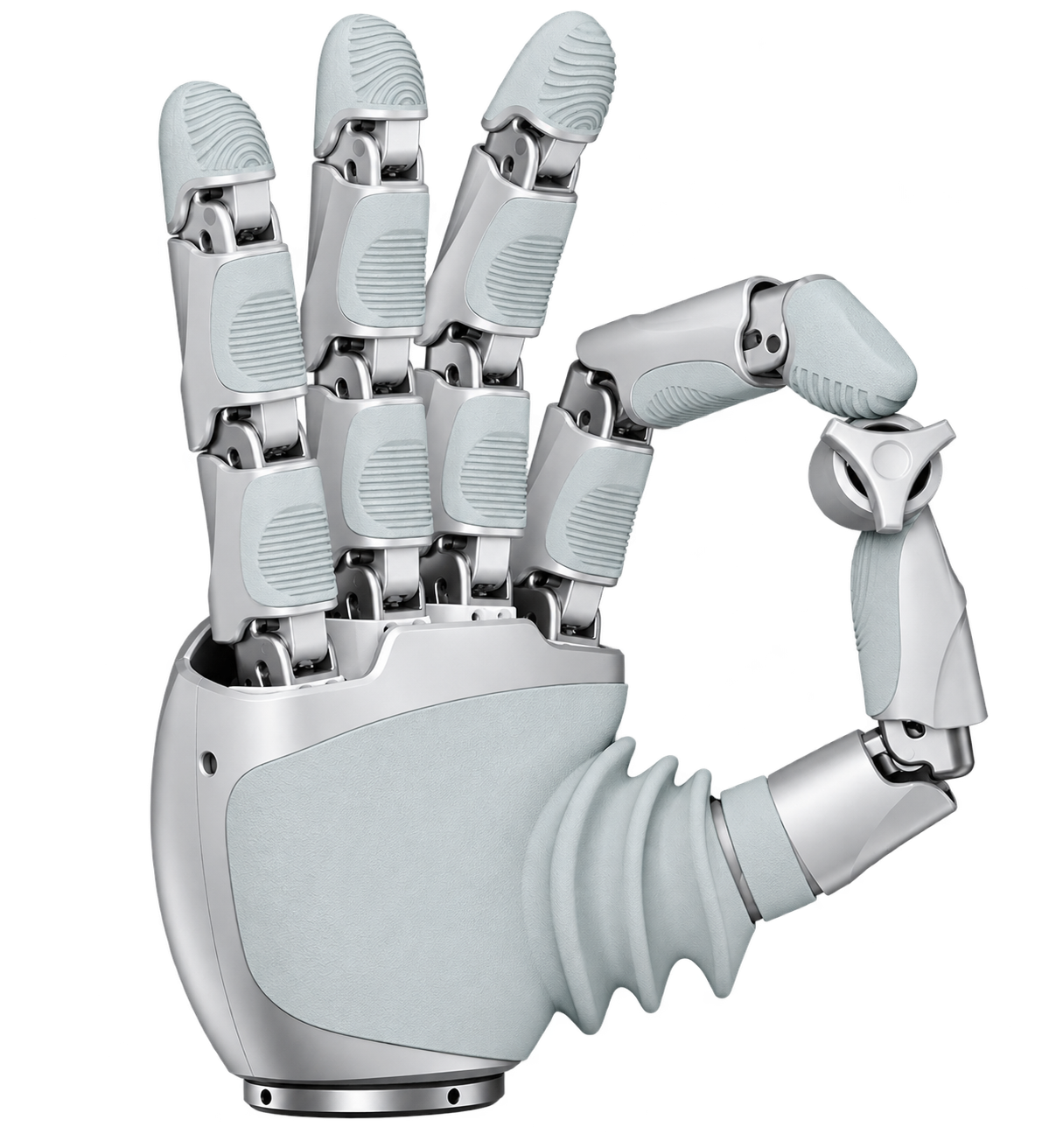
Linker Hand O30 is a five-finger robotic hand from Linkerbot with twenty active degrees of freedom. It is intended for manipulation development where control over finger configuration matters more than a simple open-and-close action. It can be evaluated as an end effector for a robot arm, a humanoid platform or a dedicated laboratory rig studying dexterous object handling.
The published configuration has 20 active and no passive degrees of freedom. Its fully active arrangement distinguishes it from hands whose movement also includes passive mechanical couplings. It offers a broader set of finger configurations for developers, together with a more demanding motion-planning and control problem.
The hand weighs 730 g. When selecting a host arm, the relevant wrist load also includes the adaptor, cables and object. The distance between the object's centre of mass and the wrist affects joint loading, so a payload calculation needs to consider the intended working poses as well as the nominal mass of the hand.
Linkerbot lists a maximum whole-hand grasping force of 70 N, a thumb fingertip force of up to 24 N and a four-finger figure of up to 30 N. Contact location and object geometry remain important when applying those numbers to a real grasp. The separate maximum-load claim of 30 kg is not a gripping-force value and does not establish a universal lifting limit for every object or wrist orientation.
Opening and closing time is listed as 0.8 seconds, with repeat positioning of ±0.20 mm. A complete handling cycle also includes approaching the object, establishing contact, moving the arm and releasing the part. Separating those stages during a trial helps identify whether cycle time is governed by the hand itself, arm motion or the chosen manipulation strategy.
The O30 needs an external 24-48 V power supply and provides CAN and CAN FD control interfaces. The stated communication frequency is 500 Hz. This defines the rate of exchanging commands and data, and helps developers coordinate the hand with the control loop of the larger robot.
Maximum electrical power is specified as 150 W. Power distribution should accommodate the intended motion and duty conditions: forming a grasp, changing finger positions and holding an object place different demands on the drives.
Potential research work includes comparing grasp shapes, forming contact sequences and studying how different finger positions affect object retention. A complete experimental system may combine the hand with an arm, scene observation and software that selects the desired finger configuration. Twenty active axes do not by themselves provide object recognition or an application that can perform arbitrary everyday tasks.
For robotics teams in the UAE, a useful evaluation starts with objects and movements that actually need the additional finger control. Examples include investigating several ways to hold one part or handling a varied set of shapes on the same rig. The result can be judged by reachable configurations, consistency of contact and repeatability of the complete manipulation sequence, rather than by force figures alone. The final configuration should also account for the host controller's bus support and the mechanical space available around the robot wrist.
Tell us about your task, site and robot. Leave your contact details so we can discuss the scope and next steps.