
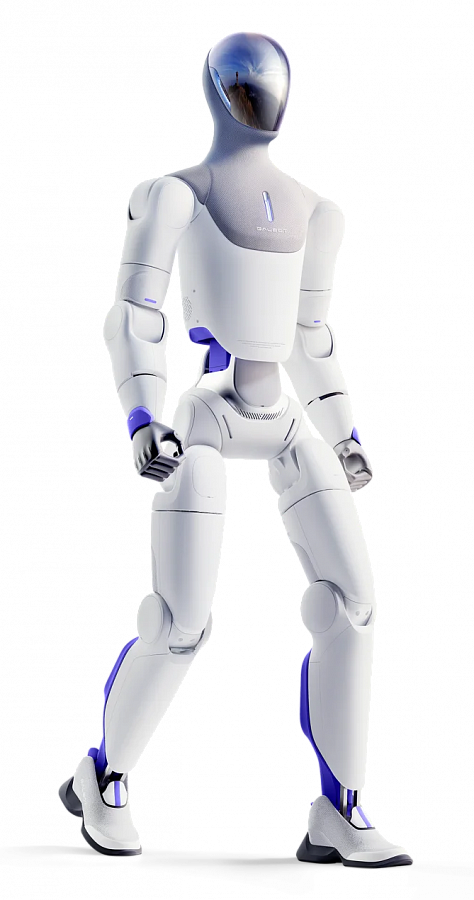
Galbot ET1
- DOF with hands
- 38
- Height
- 125 cm
- Mass with battery
- 32 kg





Price on request · Available to order
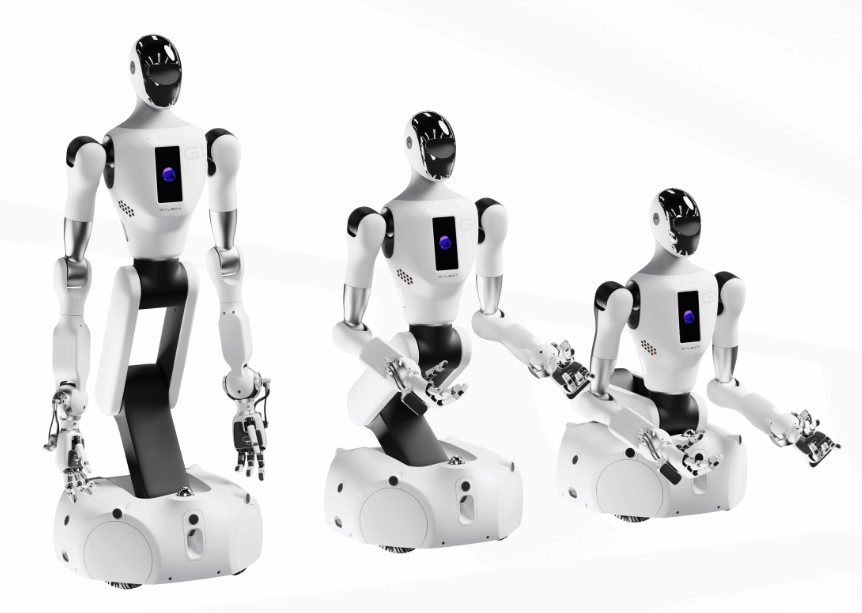
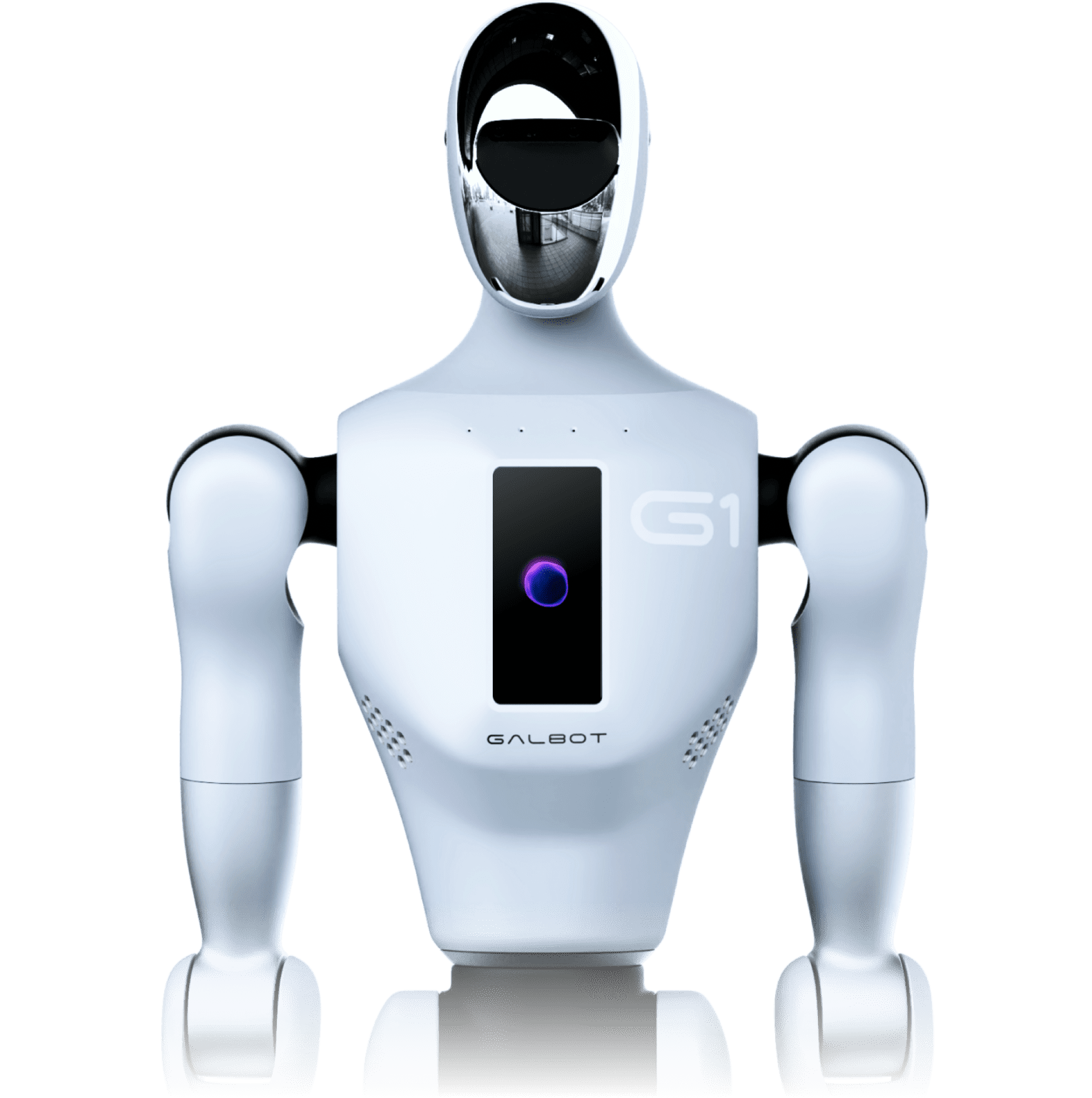
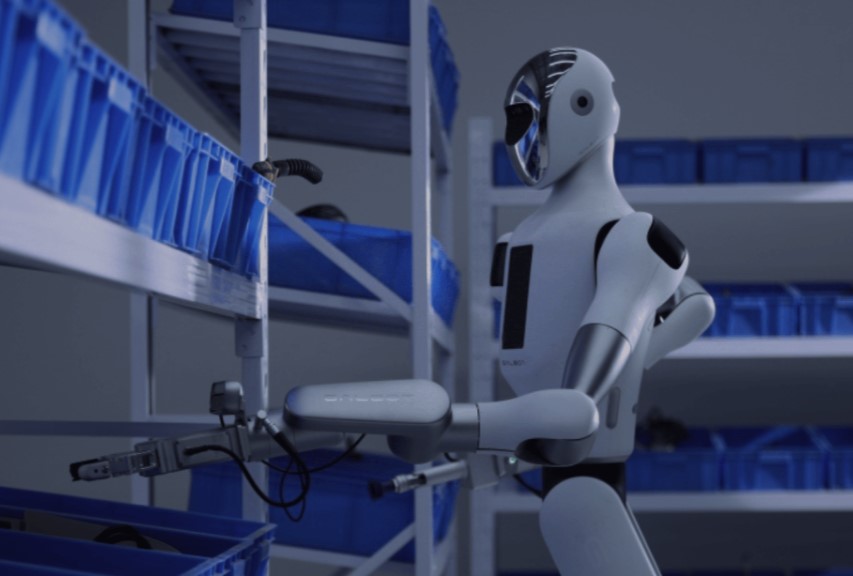
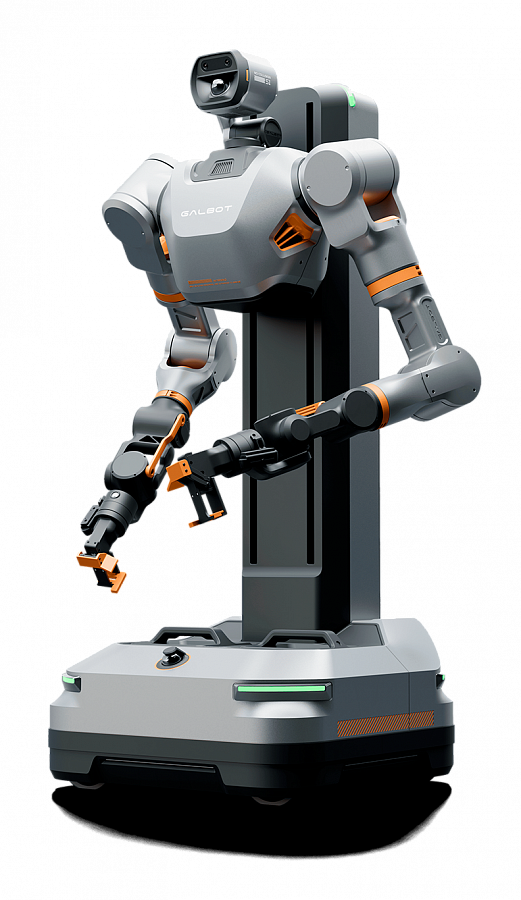
Galbot G1 is a wheeled dual-arm platform for developing grasping, transfer and placement tasks. An omnidirectional base links working positions, while the arms and adjustable body arrangement provide access to objects at different levels. It is relevant to mobile-manipulation projects connecting scene perception with a physical operation.
Each arm has seven degrees of freedom and a shoulder-centre-to-wrist-centre length of 710 mm. This supports investigation of different tool poses and approach directions, including situations where nearby equipment restricts the available movement.
Published load is 5 kg for one arm at the wrist centre. The load reference point matters when adding an end effector and carrying an object offset from the wrist. A project selects a compatible hand, gripper or suction tool and assesses the whole assembly with the intended object.
The documentation lists 21 body degrees of freedom excluding the chassis and end effectors. This covers arms, neck, waist and adjustment of the supporting structure. Maximum platform height is 173 cm. Body reconfiguration helps connect the approach to an object with the working height required for the action.
A four-wheel base provides omnidirectional movement. It can help position the body within a working area without a long turn. Application design separates the transport path between locations from the local pose used for manipulation.
G1's spatial observations include a head stereo module, body cameras and wrist depth cameras. Six-axis force-and-torque sensing at the arms provides information about interaction between the tool and surrounding objects. This is relevant to actions where reaching a coordinate is only one part of successful contact.
The base uses 3D LiDAR, ultrasonic sensors and an IMU for travel and perception close to the platform. An application combines navigation and local work-area observations into an approach, refine and act sequence. Evaluating those stages separately can help identify the source of an unsuccessful manipulation.
The documented computer is NVIDIA AGX Orin with 64 GB of memory and 275 TOPS of computing performance. AstraBrain and development resources provide the foundation for application functions. The practical operation depends on software, tooling and the selected set of objects.
A screen, microphone arrays and speakers support interaction. They can provide commands and confirmations around a research task, with content chosen for the way the robot is used. A clear operator view of progress is useful when a sequence combines movement and several manipulation stages.
The published eight-hour operating figure comes from a combined laboratory test at an average speed of 60%. A wired charger is standard in the described package, while a wireless charging base is optional. An operating plan should reflect the actual arm and base activity together with the selected power equipment.
For a UAE laboratory or integrator, Galbot G1 provides a mobile foundation for two-arm task development. Evaluation starts with a defined object and a route between working areas. A full cycle shows how base positioning, object observation, grasping and handover coordinate, and whether the selected tool is appropriate. This gives a practical basis for judging the platform as part of a complete application rather than only comparing individual mechanical specifications.
Tell us about your task, site and robot. Leave your contact details so we can discuss the scope and next steps.