
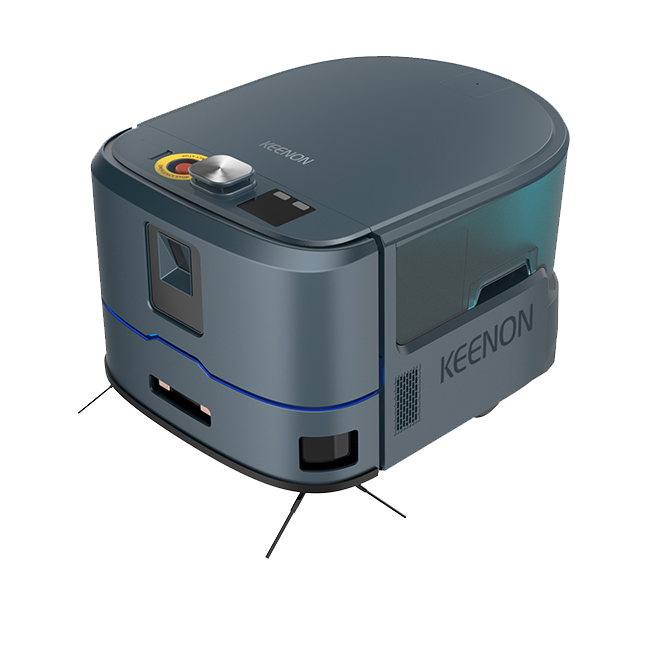
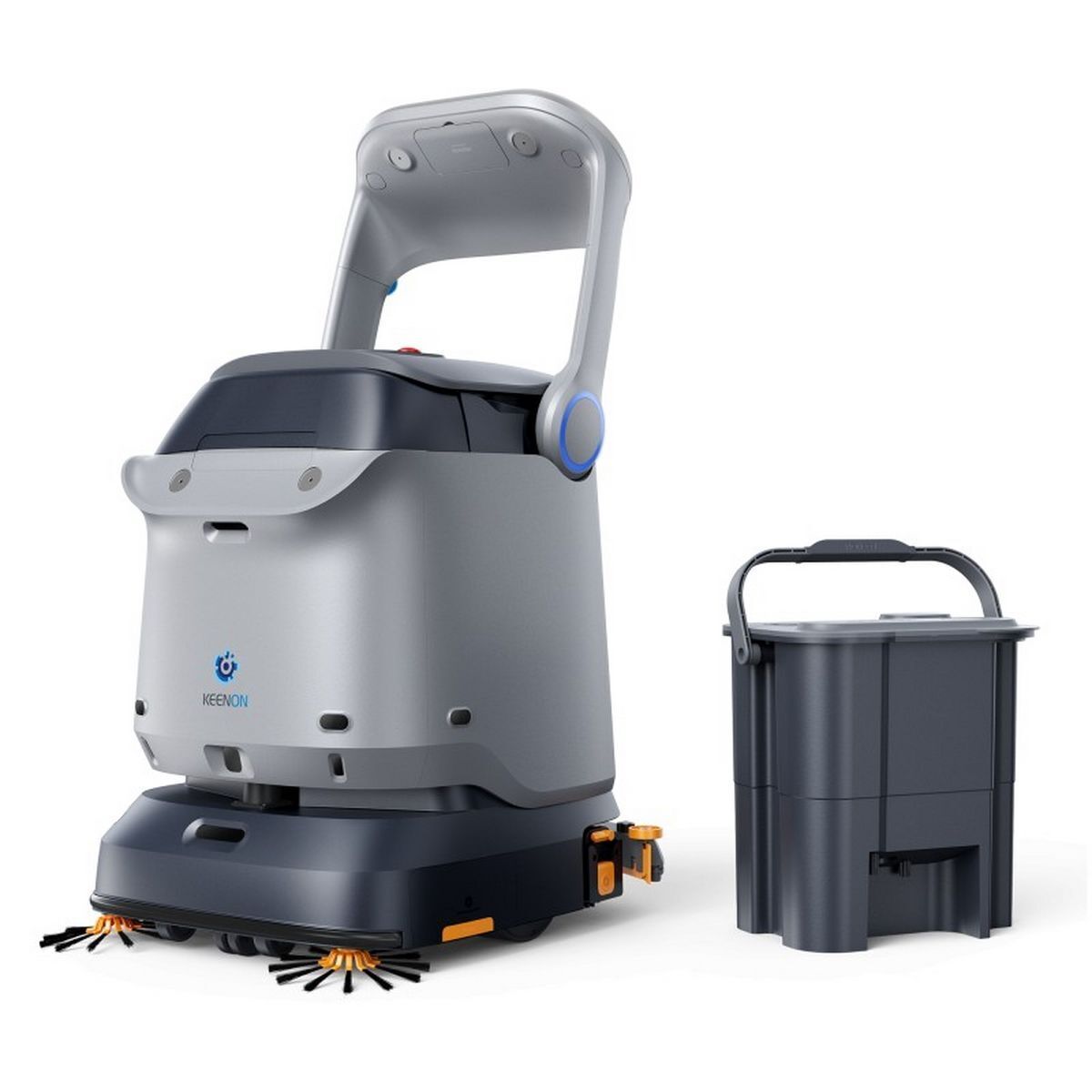
KEENON KLEENBOT C20
- Runtime
- up to 4 h
- Scrubbing width
- 285 mm
- Clean/waste water
- 7 / 5 L

Price on request · Available to order
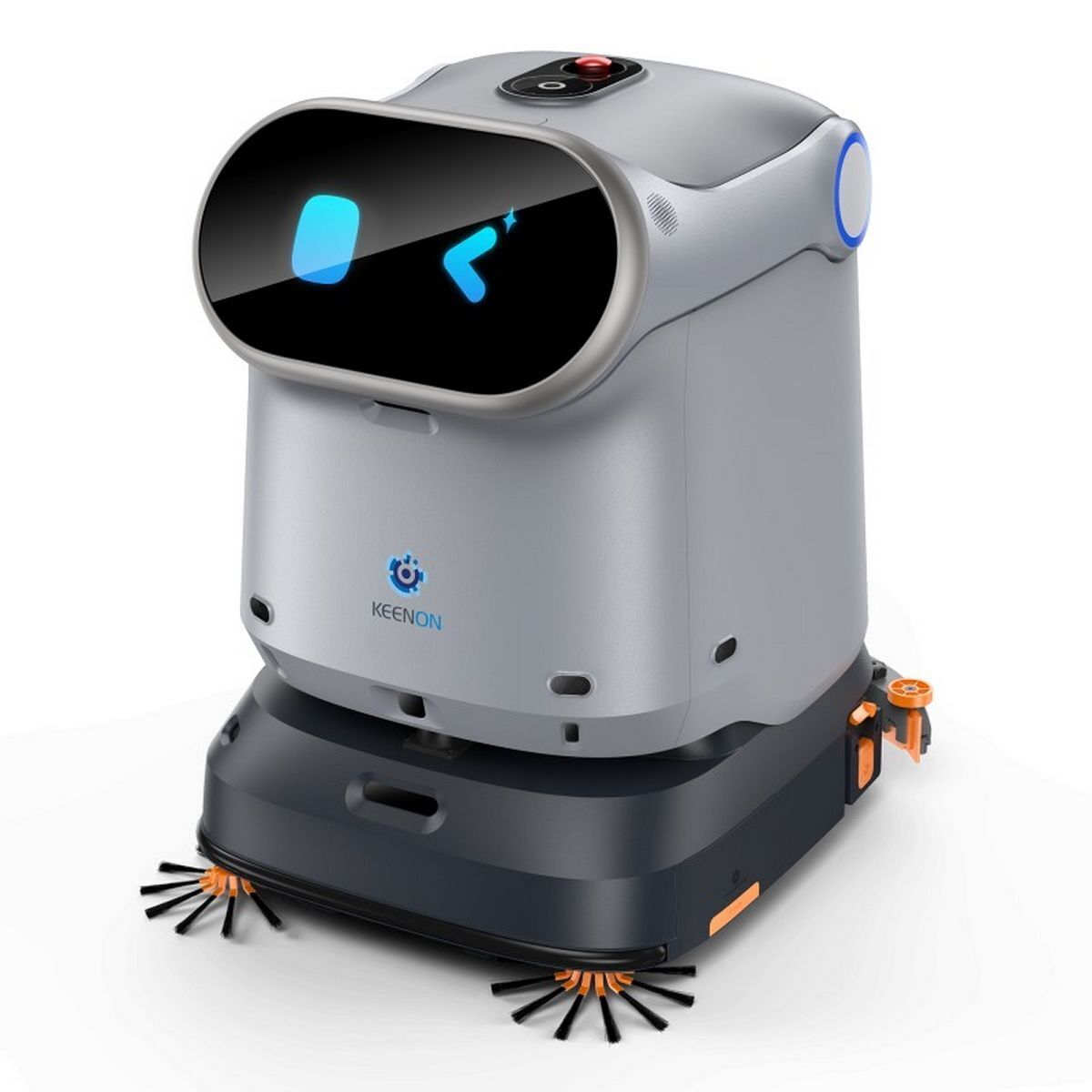
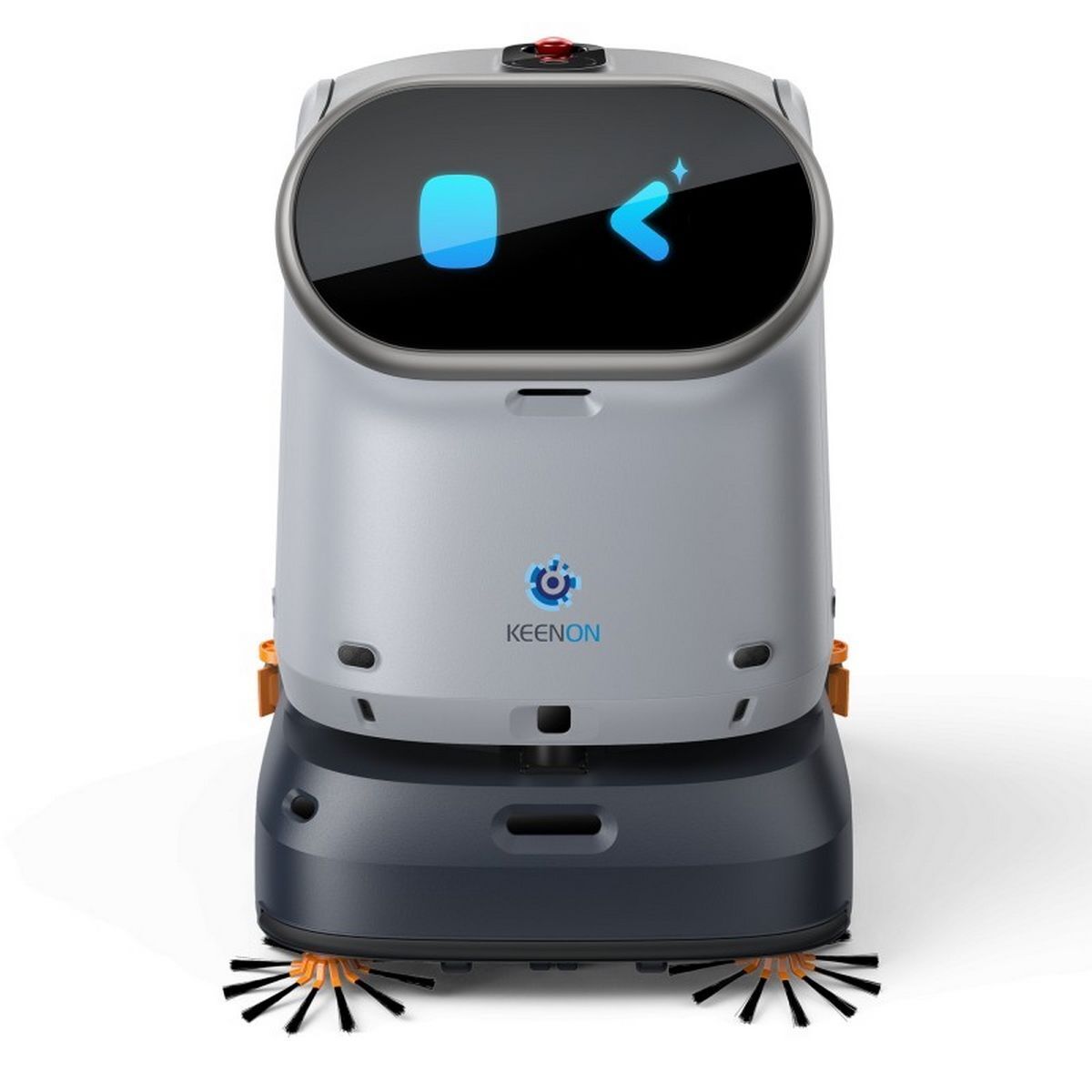
KEENON KLEENBOT C40 is a commercial cleaning robot for routine maintenance across several floor types. It combines sweeping, vacuuming, scrubbing and dust mopping for use in hotels, offices, retail premises and other shared indoor areas. Its defining arrangement is a triple-brush system that separates dry debris collection from the wet stage of cleaning rather than sending all contamination into a water tank.
Two front rollers collect dry material before the rear working section washes the floor. Dry waste goes to a separate dust collection area, while used water has its own tank. This matters operationally because emptying collected dust and draining wastewater are different servicing tasks. Separating them also helps explain how C40 approaches a mixed daily load of dust, small debris and marks on hard flooring.
After scrubbing, the suction system collects used liquid from the surface and directs it to the wastewater tank. Water delivery and the cleaning mode are selected according to the floor material and soil. A lightly soiled zone can receive routine maintenance, while an area with more visible marks can be given separate attention. One part of a building may need dry collection, while another calls for washing ordinary tracked-in soil or drink marks.
KEENON lists hard surfaces and short-pile carpet, together with automatic floor-type recognition. The practical role is to assign suitable tasks to different zones: dry care for carpeted sections and an appropriate wet process for compatible hard floors. Having multiple functions does not imply that every surface should be washed with the same settings. The cleaning plan should reflect the materials actually present in the building.
VSLAM navigation and several sensor types, including LiDAR and stereo vision, support route planning and obstacle perception. The robot also supports resuming cleaning after an interruption. This is relevant in premises where people use the same circulation space and where the cleaning route may need to adapt during a task. The sensing system supports that work without turning an occupied environment into an obstacle-free one.
An app or web interface provides task management, status monitoring and cleaning reports. A responsible team member can organise zones and follow execution without standing beside the robot throughout the route. Digital supervision still sits alongside physical servicing: tanks, brushes and the water-collection assembly remain working components of a cleaning machine and require attention.
Automatic water supply, drainage and charging arrangements are described for C40, along with IoT interaction with lifts and doors. These depend on the relevant equipment and building interfaces. They should not be read as an existing connection to every property. Workstation availability, plumbing access and the scope of any door or lift integration need to be established for the particular deployment.
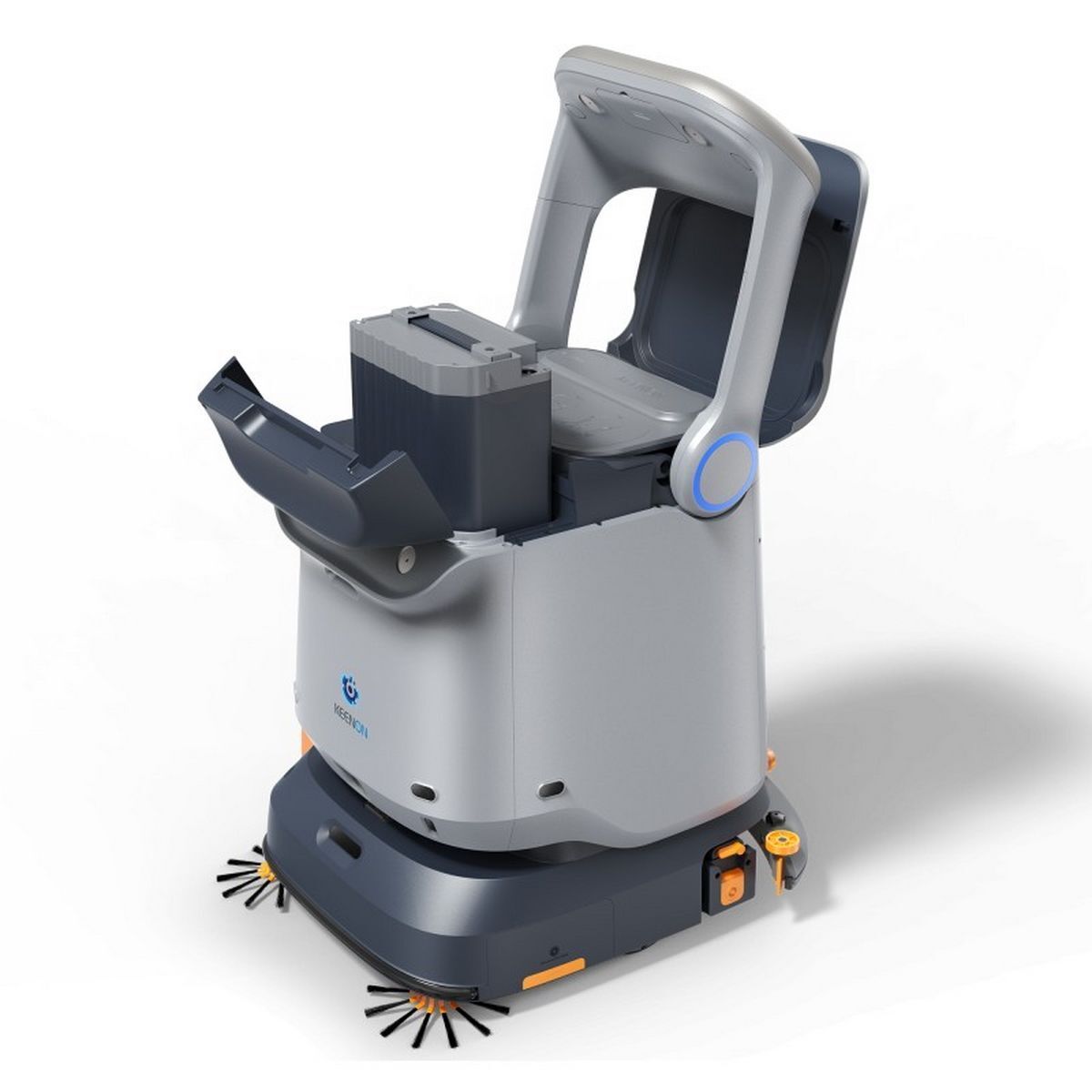
The removable wastewater tank can be washed, and the modular layout provides access to the working parts. Quick battery replacement supports successive cleaning periods when that is how the shift is organised. Planning also needs to distinguish modes: the manufacturer publishes different maximum runtimes for scrubbing and dry sweeping. The longer dry-operation figure is not the endurance of continuous water-based cleaning.
With a 400 mm vacuuming and scrubbing width, C40 sits between a very small machine for confined areas and a larger floor-scrubbing platform. For a UAE commercial property, the decision is about floor mix, contamination and servicing arrangements as well as area. Its specific value lies in combining dry and wet processes, separate waste collection and managed cleaning tasks in one platform.


Tell us about your task, site and robot. Leave your contact details so we can discuss the scope and next steps.