
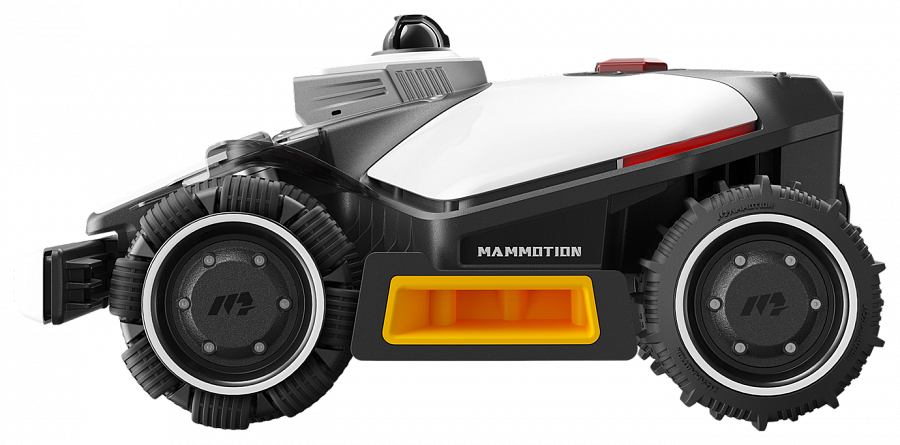
MAMMOTION LUBA mini 2 AWD 1500
- Lawn area
- 1,500 m²
- Runtime per charge
- up to 150 min
- Main disc width
- 200 mm

Price on request · Available to order
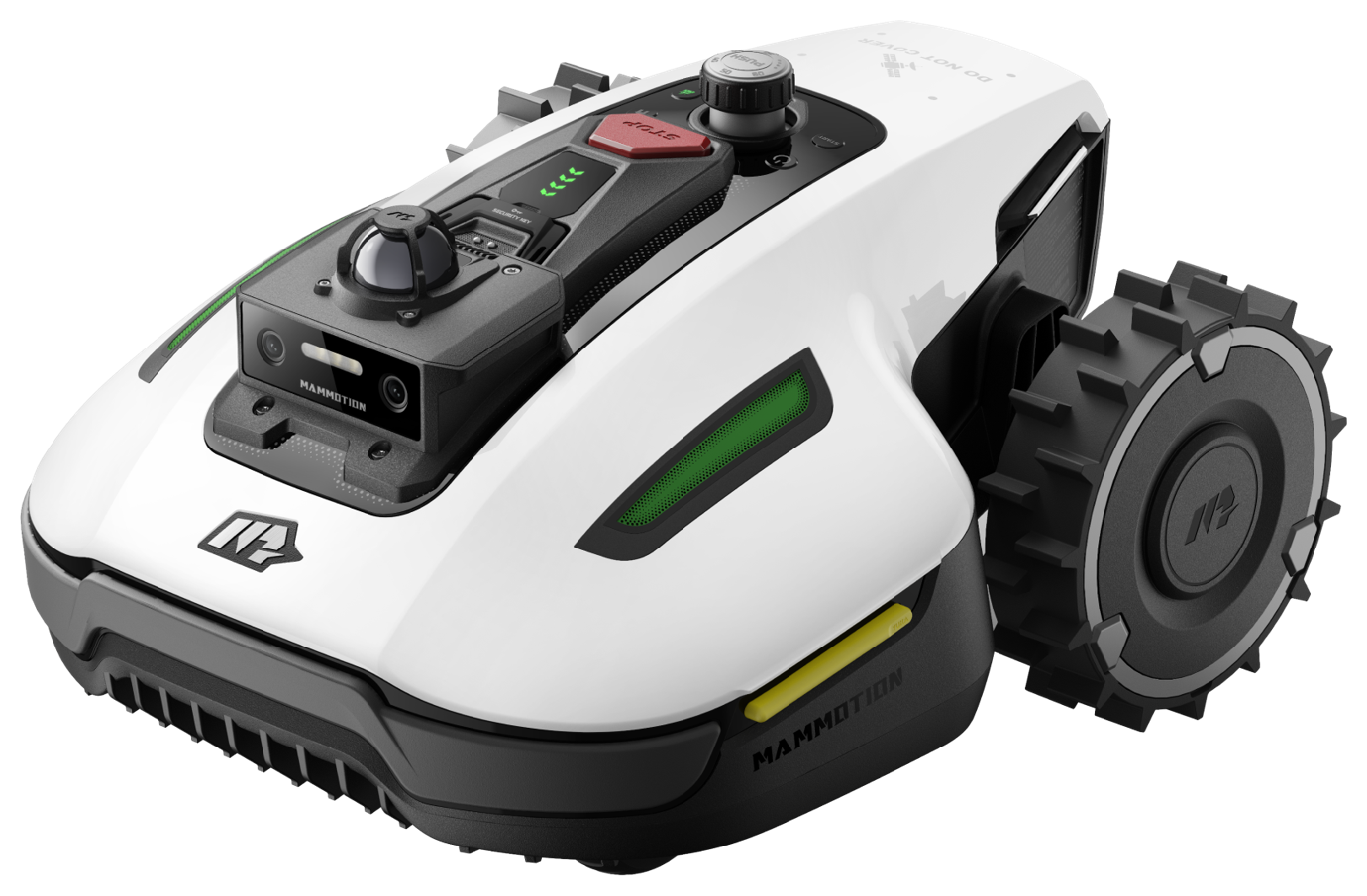
YUKA mini 2 1000 is a perimeter-wire-free robotic lawn mower for lawns up to 1,000 m². This version uses 360° LiDAR together with dual-camera AI Vision. It should not be described as the YUKA mini 2 800 configuration with NetRTK: Mammotion identifies LiDAR navigation for the 1000 and states that it does not require an RTK base station. The distinction changes how the mower perceives and maps its surroundings.
The LiDAR sensor scans around the mower in a full circle. Mammotion lists a 360° × 45° field of view, a detection range of up to 60 m and navigation precision of 1.5 cm. These figures describe the sensing and positioning system, not the cutting width or the precision of the grass cut. The second part of the system is dual-camera AI Vision. LiDAR and camera data help the mower understand the lawn boundary, terrain and objects along its route without an RTK reference station.
Setup begins by creating a lawn map in the Mammotion App. The manufacturer describes both manual and automatic mapping: a user can trace a boundary or guide the mower through an exploration route. The map editor supports mowing zones, no-go areas, virtual walls and routes that connect separated sections. YUKA mini 2 1000 supports up to 10 separate mowing zones and up to 10 maps saved to an account in the cloud. This can help organize different schedules within one property or keep plans for separate lawns.
DropMow is available for a one-time or temporary task. It allows a mowing run without changing the main lawn map. Mapping and map editing take place in the app, and Mammotion also describes partial boundary remapping when one section needs adjustment. The value of these tools depends on the layout: routes between zones must be accessible, and areas that should remain unmowed need to be marked as no-go zones.
AI Vision is designed to identify obstacles and help the mower avoid them. Mammotion claims recognition of more than 300 types of objects and describes detection of edges, steps and other potentially hazardous drop-offs. These functions assist navigation and do not replace preparing the lawn: remove objects that may interfere with the blades or movement, and check the map before starting a job. The manufacturer’s drop-off detection claim does not guarantee detection of every object or surface in every condition.
Mammotion states that the model can navigate passages as narrow as 55 cm. Consider this figure when checking gates, paths and gaps between garden features. Actual passage depends on the corridor shape, turns, surface and nearby obstacles. The YUKA mini 2 1000 card describes the LiDAR version with circular coverage, while values for the separate 800 model belong to its own configuration.
The cutting width is 190 mm and the cutting height is adjustable from 20 to 60 mm. The cutting disc uses five pivoting blades. The narrow cutting path is suited to compact lawns and restricted areas, though it also means that a larger lawn requires consideration of passes and mowing cycles. Cutting height can be set to suit the lawn condition and the desired grass finish.
Rear-wheel drive is rated by Mammotion for slopes up to 45%, also given as 24°. This is the stated maximum, not a promise of identical traction on every slope. Wet grass, loose soil, holes, edges and abrupt changes in level can affect movement. On a sloped property, review the route, exclude hazardous boundaries and assess traction in the actual conditions.
YUKA mini 2 1000 uses a 6.1 Ah battery on a 21.6 V platform. The Mammotion FAQ lists up to 2.5 hours of mowing and around 250 m² per charge, while the comparison table gives 125 minutes. Confirm the measurement conditions for the intended operating mode. The manufacturer notes that the area per cycle depends on grass height and travel speed, so these values are reference figures rather than a fixed result for every lawn. The maximum lawn size of 1,000 m² and the approximate 250 m² per charge describe different measures: a larger lawn may require multiple cycles with returns to the charging station.
When a task needs a recharge, the mower returns to its charging station. Mammotion also describes battery-health, cycle-efficiency and off-peak charging routines. Their practical effect depends on route length, mowing frequency, grass condition and the selected schedule. Lawn area alone does not determine the number of cycles required; zone layout, obstacles and task settings also matter.
Bluetooth and Wi-Fi are listed for standard setup and control. On its European product page, Mammotion also offers an optional 4G module with three years of data for remote monitoring. That term belongs to the European listing; hardware, cellular service and data terms can vary by market. Confirm the configuration and network conditions for the intended country. Mammotion identifies its app as the tool for initial setup.
The product page describes a rain sensor: during heavy rain, the mower returns to the charging station and resumes the task after the weather improves. The mower body is listed as IPX6, while IP67 refers to the protective LiDAR module housing. These ratings apply to different parts and do not mean the mower can be submerged. After mowing, clean the body and cutting area according to the manufacturer instructions, and check blade condition as part of routine use.
Mammotion lists the YUKA mini 2 1000, charging station and power supply, one extra set of blades and lubricating oil in the box. Package contents can vary by offer and market, so confirm the contents for the selected version before ordering. The Mammotion support center lists the YUKA mini 2 English manual, version V2.0, marked 202606.
Tell us about your task, site and robot. Leave your contact details so we can discuss the scope and next steps.