
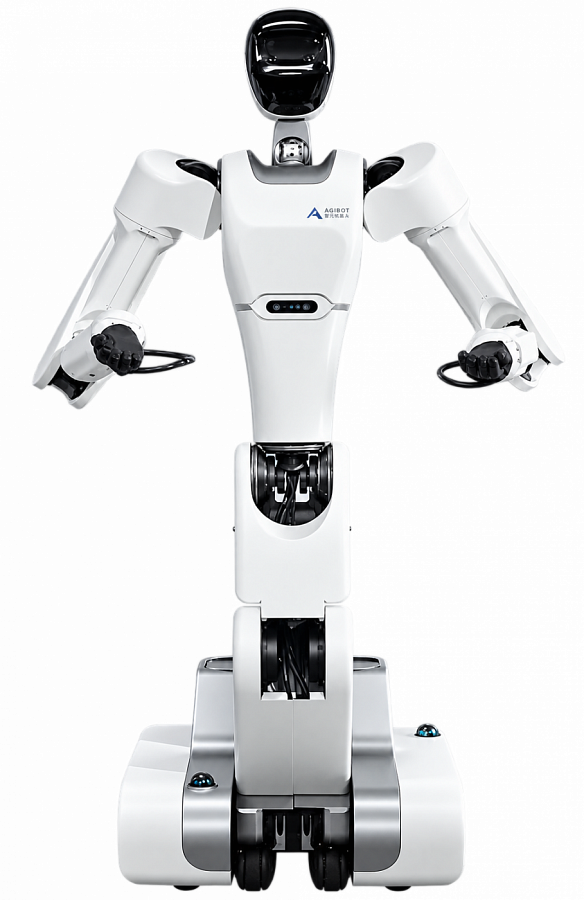
Astribot S1
- Arm load (horizontal)
- 5 kg
- Endurance
- 4-6 h
- Arm joints
- 7 DOF

Price on request · Available to order
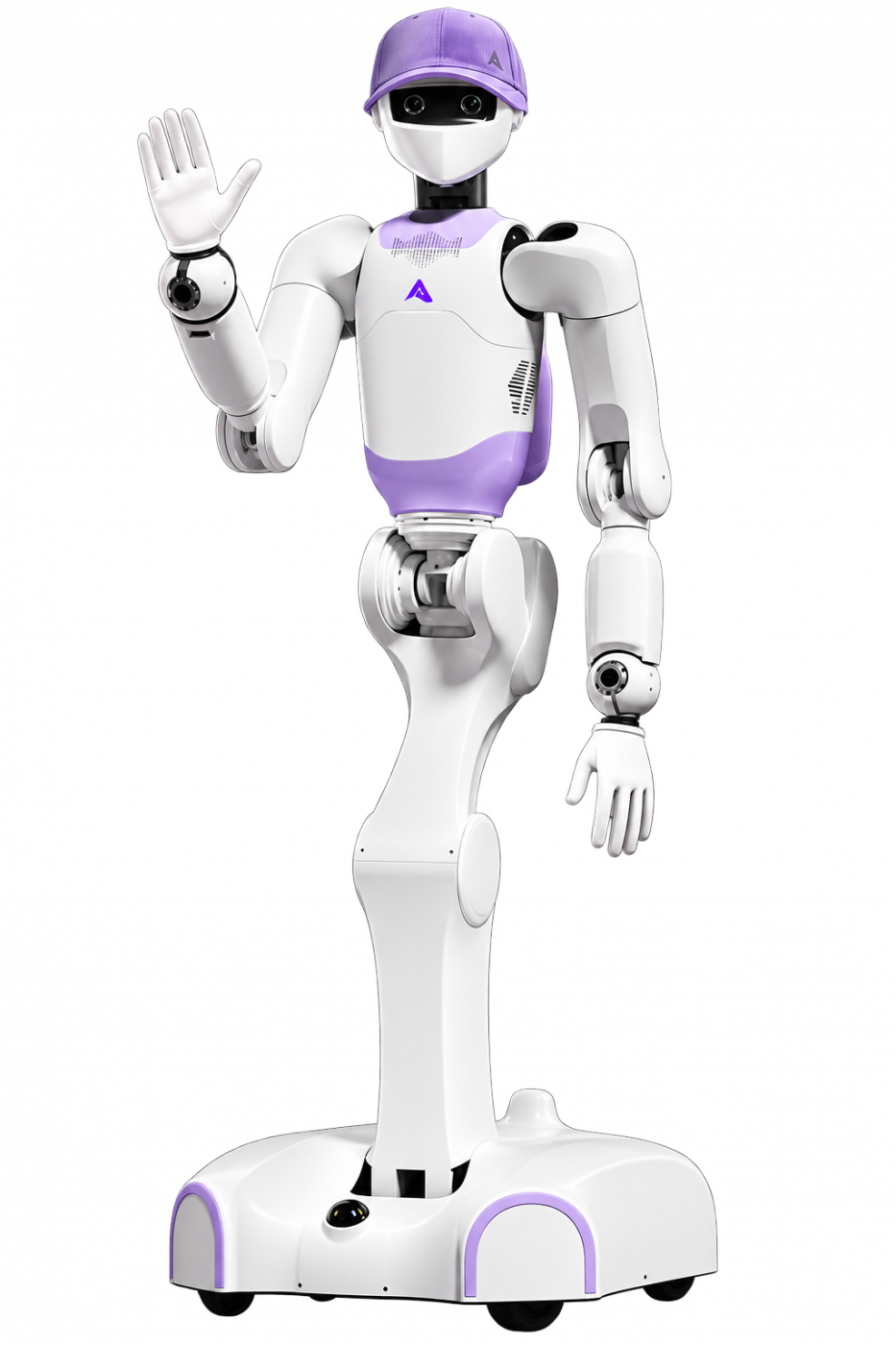
Astribot T1 is a modular dual-arm platform for embodied-intelligence research and object-handling skill development. Its cable-driven architecture connects physical movement with the control software. The model is aimed at teams working through the process from recording an action to evaluating learned behaviour on real hardware.
The manufacturer gives an approximate height of 155 cm, weight of 66 kg and 23 degrees of freedom excluding end effectors, with up to 5 kg per arm. These establish the scale of an experimental setup and help select objects and working positions.
End effectors, additional sensors and computing can be configured for the task. Different contact mechanisms suit rigid objects and deformable materials. Preparing an experiment therefore links the tool with object geometry and the intended action sequence.
The SDK and APIs provide joint and Cartesian control, whole-body coordination and sensor access. A developer can choose an appropriate level, from individual movements to a complete task sequence.
This supports dividing an experiment into manageable stages. First assess whether the required pose can be reached, then examine tool contact, and finally combine the full cycle. The sequence helps identify whether an outcome is governed by the path, contact mechanics or application logic.
AstribotOS supplies software packages and skill libraries connecting behaviour models with body control and user interaction. An application is organised around the intended result and evaluated through its physical execution.
A Lumo 2 demonstration shows T1 placing assorted items into a backpack. It combines object selection, approach and interaction with a deformable container. A different object set or action needs its own preparation rather than being assumed from that demonstration.
VR teleoperation provides demonstrations. Operating data are processed separately for model refinement, followed by deployment of updated skills over the air or through on-site installation and calibration.
A research team should retain a clear connection between the demonstration and the replayed outcome. Recording the initial object layout, contact sequence and completion criterion makes comparisons more informative. It helps distinguish a change in learned behaviour from a difference in the surrounding test conditions.
T1 supports automatic charging and quick battery replacement, with charging equipment specified for the chosen configuration. A working session also needs time for object preparation, demonstration capture and physical evaluation.
For a UAE laboratory or data-collection team, a useful first project is one repeatable operation with clear starting conditions. Moving a known set of objects can expose the contributions of observation, movement selection and action completion. Each stage can be examined before the task is made more complex.
Once a consistent result is established, the experiment can vary object shape, position or presentation. This provides a practical way to investigate skill transfer and decide what additional demonstrations are needed for the next training cycle. The process connects modular hardware, development tools and measurement of physical behaviour.
Tell us about your task, site and robot. Leave your contact details so we can discuss the scope and next steps.