
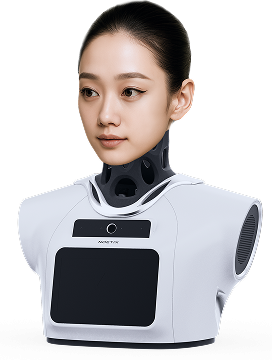
Noetix Xiao Nuo
- Active head assembly
- 32 DoF
- Interaction
- Voice and expression
- Height
- 60 cm

Price on request · Available to order
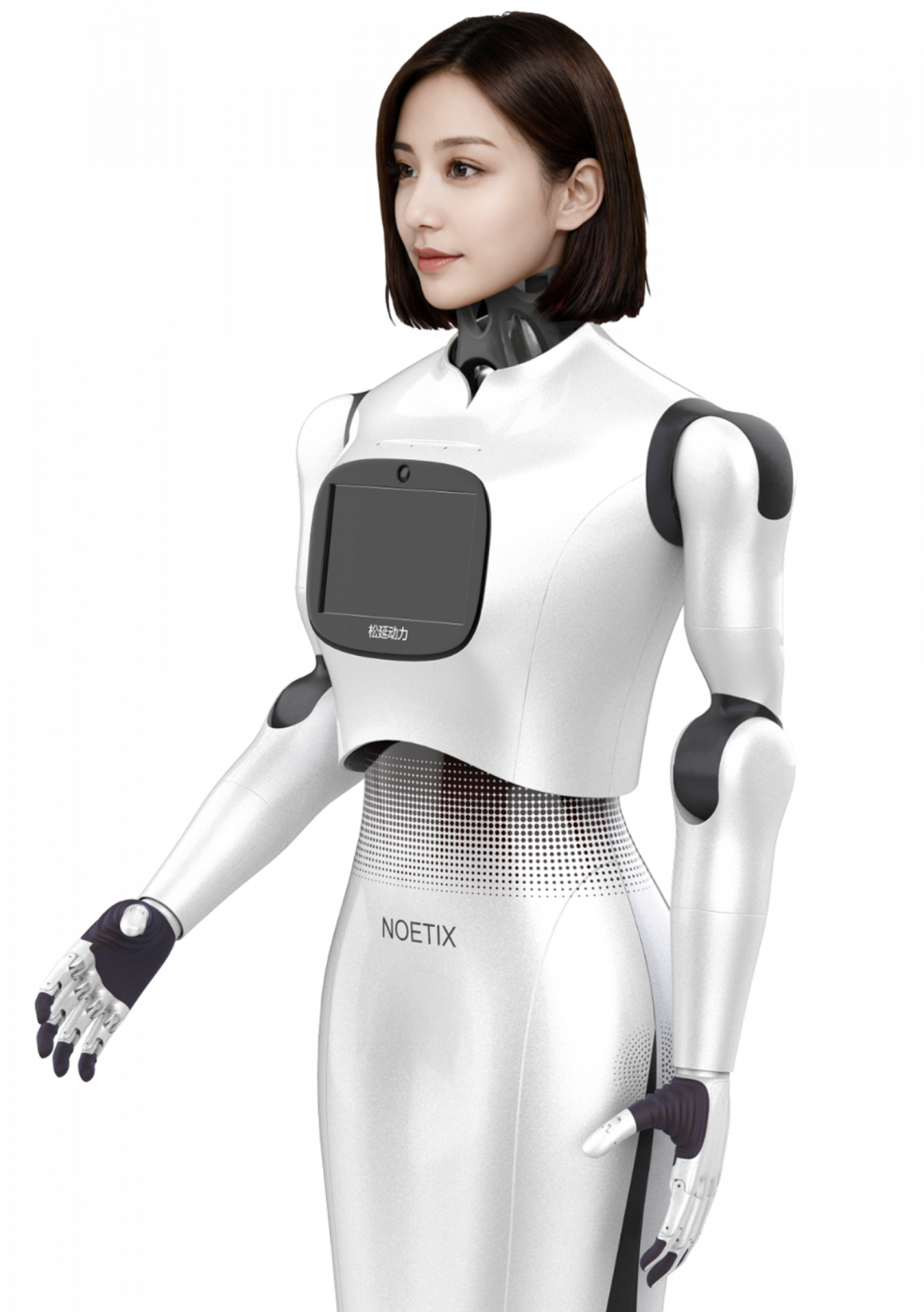
Noetix W1, formerly Hobbs W1, is a full-height wheeled biomimetic robot with a realistic human head, two arms and articulated hands. It combines conversational interaction with movement through an indoor environment. The base travels on wheels: the human appearance of the upper body does not imply walking legs. Noetix positions the model for reception, exhibition tours, information services, education and research.
The W1 head has 32 active degrees of freedom and a separately specified set of eight passive degrees of freedom. Its mechanisms control facial expression and neck movement, supporting the smiles, anger, sadness and other expressions described by the manufacturer. Mouth motion is synchronised with speech in the context of the conversation. The advertised 54 active DoF belong to the head, arms and hands together; they are not a count of independent facial movements.
Noetix specifies platinum silicone skin and real human hair for the realistic exterior. The presentation depends on surface texture, styling and physical movement as well as facial colour. The facial skin supports magnetic and snap-on attachment with non-destructive removal. Personalised facial design and quick replacement are also described, allowing the character's appearance to be considered separately from the specification of its mobile platform.
Each W1 arm has an arm mechanism and a separate dexterous hand. The manufacturer specifies five active degrees of freedom per arm, while each hand has six active and five passive degrees of freedom. These figures describe different components and should not be substituted for each other. The stated payload is two kilograms per arm. A separate maximum-load entry for the mobile base is not an allowable weight for an object held in one hand.
The hands support replaceable biomimetic silicone coverings, bringing a realistic appearance to the upper body's gestures as well as its face. The presence of a dexterous hand and a payload rating does not establish a ready-made grasping application for any object. Object shape and the movement sequence belong to the actual application. W1 provides a platform for combining speech and upper-body motion in one physical character, rather than simply transporting an audio display.
Indoor navigation and obstacle avoidance are explicitly claimed for W1. Noetix describes LiDAR, ultrasonic sensing and depth cameras working together. The platform specification additionally lists SLAM navigation, anti-drop sensors and infrared-assisted automatic recharging. The chassis uses differential two-wheel drive with a caster. These are model-specific mobile capabilities and should not be transferred to the Xiaoyue tabletop heads or the Xiaonuo bust.
The route still has to match the platform. The W1 specification separately identifies the gaps, small steps and incline that the base can negotiate, along with its minimum passing width. A tour layout can therefore be assessed against the wheeled mechanism rather than inferred from the robot's human outline. The realistic upper body is not evidence of stair climbing or suitability for uneven outdoor ground.
W1 includes cameras in the eyes and chest, a microphone array and a screen. For its conversational system, Noetix names large language model options including Doubao, iFLYTEK and Qwen. This connects spoken input, response generation and lip movement within the same interaction. Published conversation and expression latency figures depend on actual network conditions, so they should not be presented as guaranteed reaction times for every installation.
The manufacturer provides an Android SDK, demonstration packages and developer documentation. They support work on a particular reception or exhibit application, without establishing that a customer's outside systems are already integrated. Model-specific product brochures and introductions are also published. Together, these materials make it possible to assess the mobile base, realistic head and handling components separately before combining them into one visitor experience.
W1 differs from a stationary robotic head because it brings mobility and articulated arms into the same product. It differs from a walking humanoid because its movement is provided by a wheeled chassis. This combination is relevant where the proposed experience needs a realistic conversational character to change position indoors as well as speak and gesture. Selecting that format should follow the intended route and interaction, while keeping the individual limits of the base, arm and head visible.

Tell us about your task, site and robot. Leave your contact details so we can discuss the scope and next steps.