
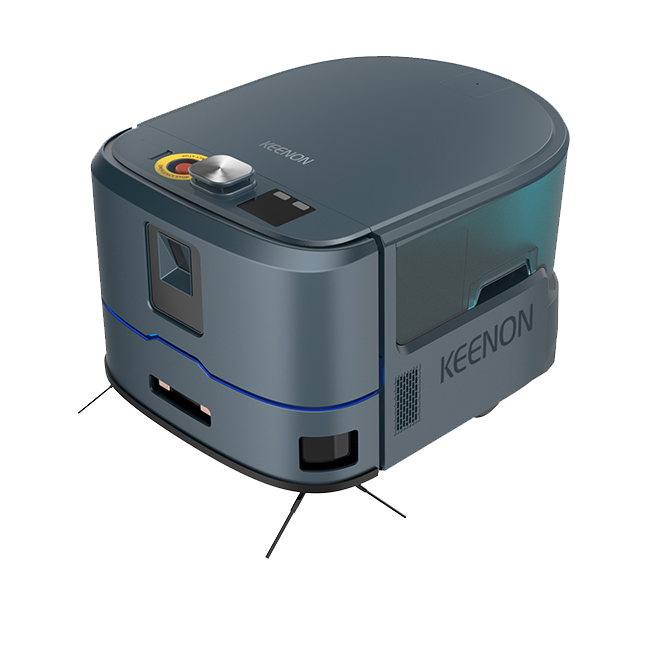
KEENON KLEENBOT C20
- Runtime
- up to 4 h
- Scrubbing width
- 285 mm
- Clean/waste water
- 7 / 5 L



Price on request · Available to order
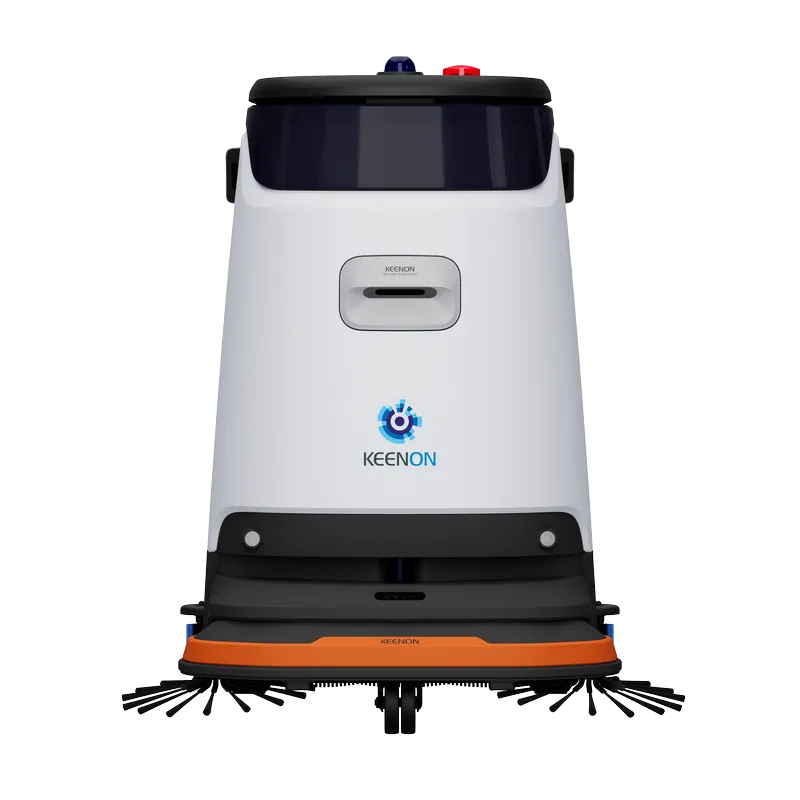
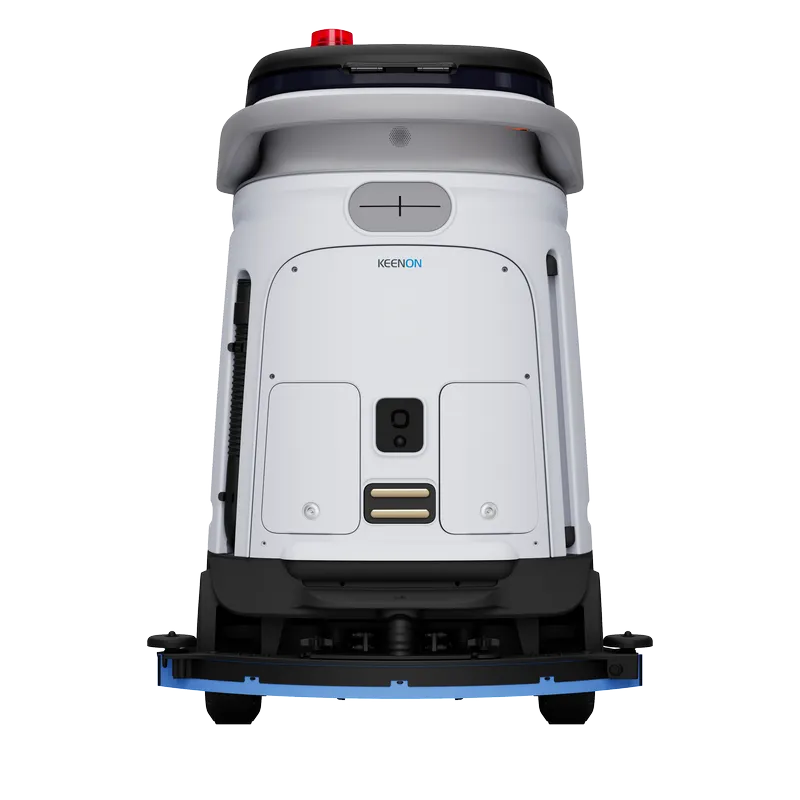
KEENON KLEENBOT C55 is an autonomous floor scrubber for medium and large commercial spaces. It combines dry debris collection and washing in a single pass, providing a platform for routine care of extensive hard-floor areas. Relevant settings include shared building areas, retail facilities and other properties where route size, water capacity and the organisation of sustained cleaning are central to the task.
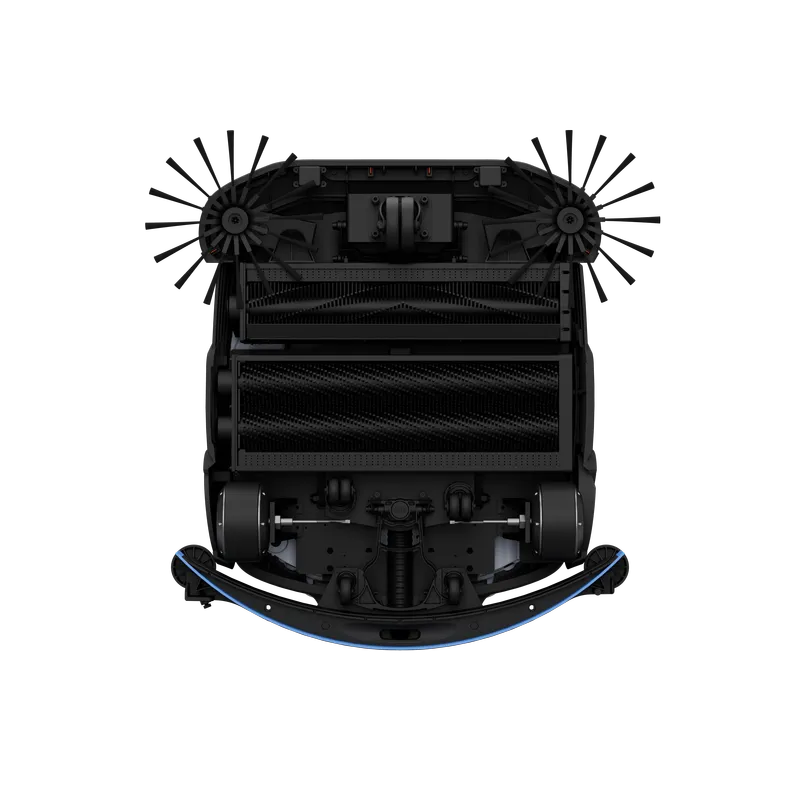
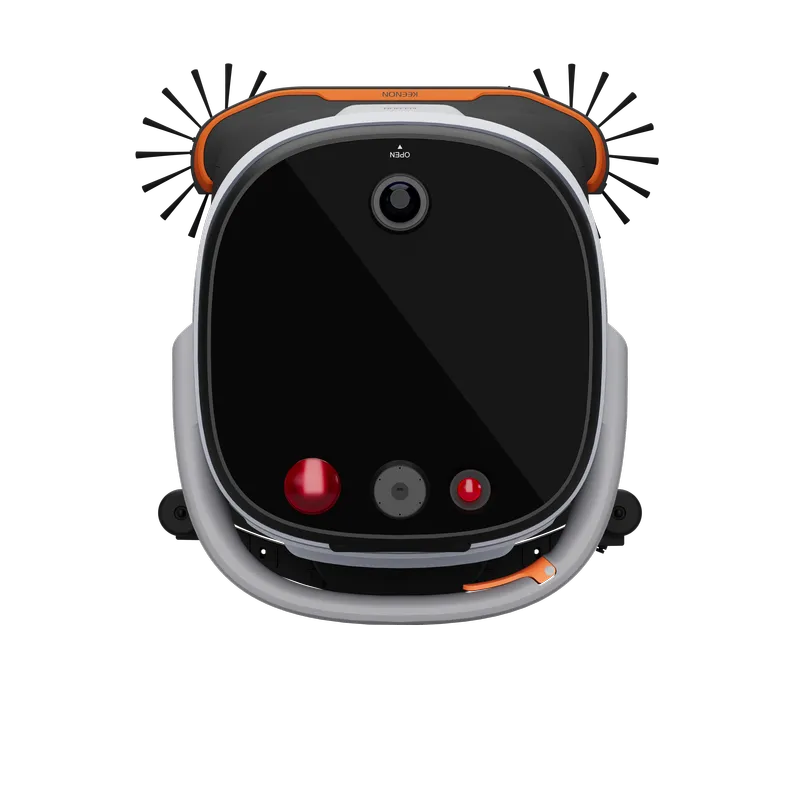
The triple-roller arrangement combines pre-sweeping with the wet cleaning stage. Dry material is collected before the floor is washed and the used liquid recovered. This allows a single planned route to address tasks that might otherwise be organised as separate sweeping and scrubbing visits. Cleaning intensity still needs to reflect the soil present and whether the surface is suitable for a water-based process.
A 550 mm scrubbing width positions C55 towards more open areas than a compact robot intended for small local zones. The theoretical productivity figure in the specification describes capacity under stated conditions, rather than the floor area that every shift will deliver. Turns, detours, repeated treatment and servicing all take time. The practical route is therefore best assessed against the layout of the actual property.
Clean and used water have separate tanks. The 60 L clean-water capacity supports planning of longer wet routes, while recovered liquid is held separately instead of being returned to the floor supply. Solid-waste containers are serviced as they fill. That arrangement is relevant where a route contains both loose particles and the ordinary marks associated with regular building use.
A tilting water-tank structure provides access to pumps and pipework for maintenance. KEENON also describes a workstation for charging, water supply and drainage. Using that arrangement requires the relevant equipment and connection to the building services. How much servicing is automated depends on the configuration included in the project and where the equipment can be installed.
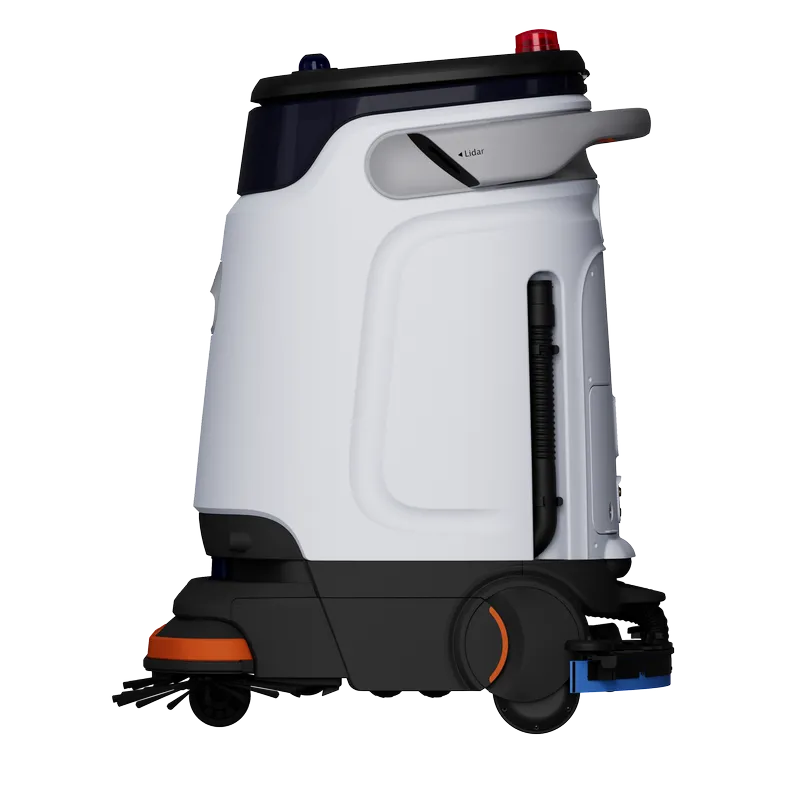
A top-mounted multi-line LiDAR and stereo vision sensors contribute to environmental perception and route planning. The robot avoids obstacles while cleaning its assigned area, and supports resuming an interrupted task. This matters when a section is temporarily occupied by visitors or equipment. An app or web interface provides task status, remote supervision and cleaning reports for the team responsible for the facility.
IoT interaction with lifts and gates, together with multi-machine scheduling, creates scope for more complex building workflows. Those features depend on the required interfaces being in place. An inter-floor route is an infrastructure arrangement rather than a capability established simply because the property contains a lift. The cleaning plan and building connections need to be considered together.
C55 can switch between autonomous and manual operation, with an assist handle for direct control. This is useful when a particular section is better handled under an employee's immediate supervision. A dual-battery arrangement supports replacement, allowing another cleaning period to be organised without waiting through a full charge when a suitable prepared spare is available.
The chassis is rated to cross obstacles up to 5 cm under the manufacturer's conditions. That refers to an appropriate obstacle profile rather than stair climbing. For a UAE property operator, the case for C55 centres on recurring wet cleaning over an accessible larger area. A wider working assembly, substantial water capacity and service access help organise that process, while the actual route and contamination determine the result to be evaluated.


Tell us about your task, site and robot. Leave your contact details so we can discuss the scope and next steps.