
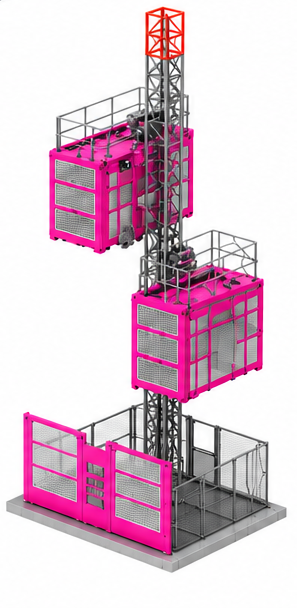
Intelligent Construction Hoist SC200/200ZA
- Rated capacity of two cages
- 2×2000 kg
- Maximum installation height
- 242 m
- Lifting speed
- 0–36 m/min

Price on request · Available to order
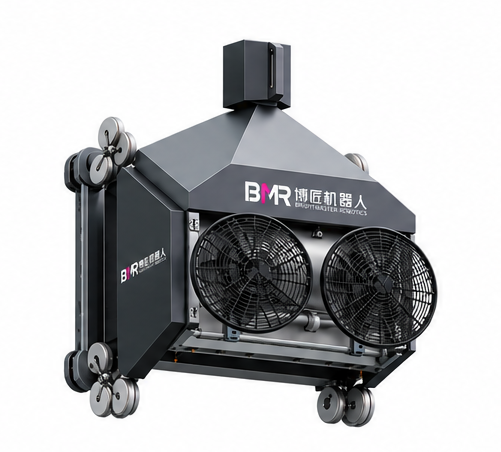
The BrightMaster MQ200 automates curtain-wall cleaning on high-rise and ultra-high-rise buildings. Suitable surfaces include flat and large-curved glass, metal and stone facades. Typical sites include office buildings, hotels, urban landmarks and other properties requiring regular maintenance of large exterior surfaces.
The operating arrangement combines ground-based manual control, autonomous work at height and intelligent detection. This separates direct cleaning activity from equipment supervision. Assessment for a specific building begins with facade shape, cladding material, height and architectural projections, followed by review of suspension and water-supply arrangements.
The AI vision system identifies wall features, obstacles and levels of cleanliness. This information supports path planning and assessment of the cleaned surface. The MQ200 also generates cleaning reports automatically, providing useful records for scheduled maintenance and the handover of results between a building operator and cleaning contractor.
A modular obstacle-crossing mechanism is designed for projections up to 400 mm high. Overall facade coverage is stated at at least 80%. During assessment, plot decorative elements and joints on the working plan: their positions define work-zone boundaries, transitions and areas requiring a separate access arrangement.
Cleaning width is 1000 mm and maximum working height is 200 m. Operating slope ranges from 0 to 90°, while moving speed ranges from 0 to 0.2 m/s. The upper speed endpoint is equivalent to 0.72 km/h. These specifications help relate pass lengths, surface geometry and equipment movement within a chosen section of the facade.
BrightMaster states cleaning efficiency of at least 350 m²/h. Maintenance planning should relate this figure to contamination, facade material and access to the work zones. The building schedule also needs to include installation, repositioning, utility connections, surface inspection and any local repeat cleaning required after assessment.
The MQ200 operates at 220 V and receives water through the ground-side supply arrangement. An integrated unit recovers used water. Utility routing and wastewater handling should therefore be planned together with the cleaning path, particularly near entrances, pedestrian areas and landscaping.
Specifications list total mass of no more than 80 kg and an IP54 protection rating. Installation and suspension should be assessed for the complete equipment arrangement on the building. Place the ground control position so that the operator can observe progress, supervise water and power connections and carry out the required response to an interruption.
The robot includes a redundant safety system for operation at height. Use on a particular building requires an agreed suspension arrangement, roof access and control of the area below the facade. Weather restrictions, inspections and restart procedures should follow the equipment documentation and conditions at the property.
Prepare facade drawings, photographs, building height, cladding material and curvature, contamination type and cleaning frequency. Mark projections, suspension points and access to water and electrical power separately. These details connect the MQ200 specifications with the actual maintenance route and the building operator's requirements.
For recurring work, divide the facade into clearly identified sections and agree how completed areas will be recorded. This helps the maintenance team relate automatic cleaning reports to the building plan and organize subsequent inspections. The same plan can record areas needing local attention, allowing automatic cleaning and follow-up work to be scheduled together.

Tell us about your task, site and robot. Leave your contact details so we can discuss the scope and next steps.