
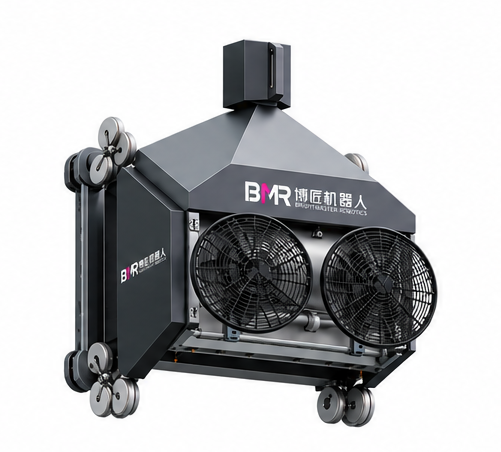
Facade Cleaning Robot MQ200
- Cleaning width
- 1,000 mm
- Cleaning efficiency
- ≥350 m²/h
- Working height
- ≤200 m

Price on request · Available to order
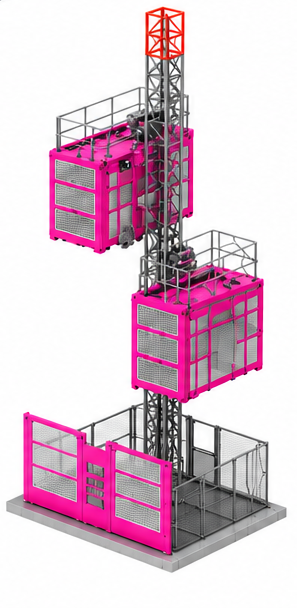
The BrightMaster SC200/200ZA is a twin-cage construction hoist with automated dispatch functions. It transports people, materials, tools and construction robots between floors. On a site using robotic processes, the hoist connects individual work zones into a coordinated route: equipment must reach the required floor when the work area is ready.
The hoist responds to external floor calls and in-cage floor selections. Automatic landing doors form part of the described system. These functions provide a basis for coordinating vertical transport with material delivery and equipment movement, reducing repeated manual communication between floors.
Rated capacity is 2×2,000 kg, meaning 2,000 kg for each of the two cages. Each cage measures 3.2×1.5×2.45 m in length, width and height. During selection, compare these figures with the size and mass of typical loads, as well as door positions and floor landings.
Robot transport needs assessment of the complete route: approach to the hoist, cage entry, positioning during travel and exit onto the working floor. Mark waiting points, turning areas and the sequence for personnel and material access on the plan. This helps coordinate equipment delivery with the work already taking place on each floor.
Maximum installation height for the SC200/200ZA is 242 m. Lifting speed ranges from 0 to 36 m/min and motor power is listed as 2×2×15 kW. A vertical-logistics assessment should use these figures together with floor count, stopping levels and expected transport frequency.
Automatic operation includes dual-cage interlocking control and automatic leveling. Alignment between the cage and landing is especially relevant when construction equipment moves between floors. Coordinate the installation arrangement, landing positions and equipment transitions with the building design and hoist documentation.
When connected to a vertical-logistics scheduling system, the hoist supports automated interaction with construction robots. Listed capabilities include wireless interconnection, robot dispatch, pre-queuing for the hoist, one cage serving multiple robots and intelligent parking.
These functions provide a basis for aligning transport tasks with the construction sequence. Define which robots will be carried, where they wait, who assigns priorities and how floor readiness is confirmed. Compatibility of particular machines and the scope of the connected system should be agreed during transport-process design.
The system includes overload alarms, real-time monitoring of abnormalities and maintenance alerts. Equipment-safety management supports lifecycle oversight by the manufacturer, rental or engineering service provider and general contractor. This approach connects operating events with the parties responsible for the equipment.
The web platform includes over 60 functions, while the app and mini-program platforms include over 25; the system comprises six main modules. For a project, establish user roles, responses to alerts and the handover of maintenance information. This helps fit the hoist's digital functions into the site's operating procedures.
Prepare building height, floor count, landing plans and the size and mass of the main loads. Identify the construction robots involved, shift pattern and expected transport peaks separately. This provides a basis for assessing demand on each cage, organizing queues and aligning hoist operation with the construction schedule.
For coordinated robot transport, also agree how a completed journey is handed over to the team on the destination floor. Access to the landing, temporary material storage and the readiness of the next work zone all affect the practical transport sequence. Reviewing these interfaces together helps connect automatic calling and dispatch with the real movement of equipment around the building.

Tell us about your task, site and robot. Leave your contact details so we can discuss the scope and next steps.