
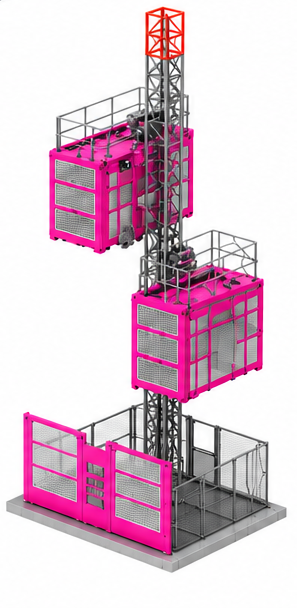
Intelligent Construction Hoist SC200/200ZA
- Rated capacity of two cages
- 2×2000 kg
- Maximum installation height
- 242 m
- Lifting speed
- 0–36 m/min

Price on request · Available to order
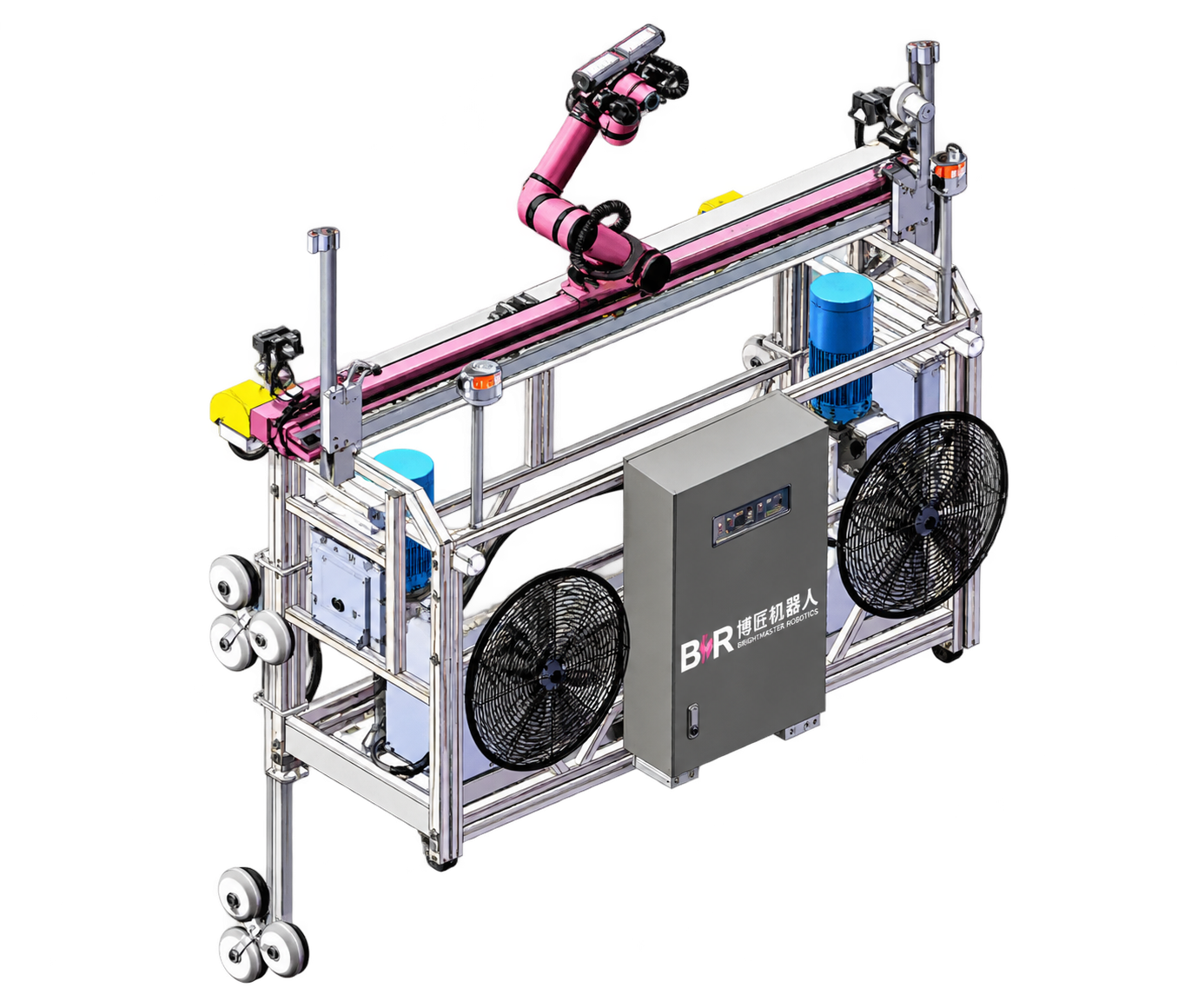
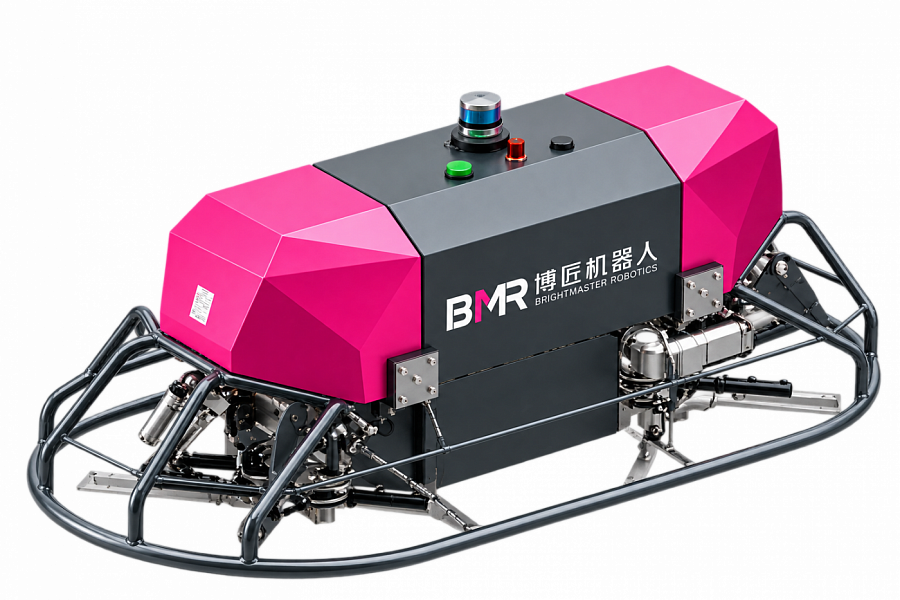
The BrightMaster T100 applies primer and finish coatings to exterior walls of mid-rise and high-rise buildings. It is intended for new construction and refurbishment of residential and public buildings. Working surfaces include flat and gable walls, balconies, bay windows, curved areas, and internal and external corners.
Supported coating types include latex, multicolor and relief paints, together with real-stone-effect finishes. Selection should connect the coating material with facade geometry and the application process. Divide the work plan by surface type: a large flat wall, balcony area and corner detail require different pass arrangements even when they belong to the same exterior coating system.
The T100 mounts on standard aerial work gondolas 2-4 m long. Effective tool stroke is also listed at 2-4 m. The modular design allows robotic application to be assessed together with the suspended platform used on the project, checking its configuration and position relative to the wall.
Listed robot mass is no more than 400 kg, while individual module mass is no more than 50 kg. Use these figures separately when preparing the installation: suspension loads depend on the actual assembled configuration, and delivery and assembly depend on the module set. Maximum working height is 100 m. Platform size, suspension positions and roof access should be reviewed for the particular building.
The machine supports semi-automatic and fully automatic operating modes. It recognizes surface features and generates spraying paths; trajectory planning can be manual or fully automatic. Automatic obstacle crossing covers projections up to 200 mm high. Before work, identify architectural elements that define the boundaries of separate coating zones.
Mobile coating technology is combined with dynamic pressure control and adaptive spraying. These functions are intended to treat different surface shapes and support coating consistency. Remote observation, construction statistics and aerial attitude monitoring help the operator follow the process from a position away from the spray area.
The material tank holds 80 L, rated power is 4 kW and operating voltage is 380 V. Establish electrical connection points, material preparation space and replenishment arrangements before work begins. Coordinate each application strip with gondola position so that coating and equipment repositioning follow the selected process.
Overall surface coverage is stated at at least 80%. BrightMaster lists efficiency of 180 m²/h for gable-wall flat coating and 100 m²/h for textured-paint application. These figures describe different processes. Project scheduling should account for the actual coating and facade shape, tank replenishment, equipment repositioning and treatment at work-zone boundaries.
A useful assessment includes facade drawings, elevations and photographs of projections, balconies, bay windows and corners. Add the coating specification, primer and finish requirements, available gondolas and suspension arrangement. This information helps establish where automatic application is suitable and how the remaining local operations will be organized.
Planning should also address protection of surrounding areas from overspray, personnel access below the facade and the sequence for changing work zones. Installation, suspension and actions following an interruption should follow the project documentation and equipment manual. The T100 can then be assessed within the complete facade-finishing process, from material delivery through application to inspection of the treated surface.
Tell us about your task, site and robot. Leave your contact details so we can discuss the scope and next steps.